Art + Thai Language
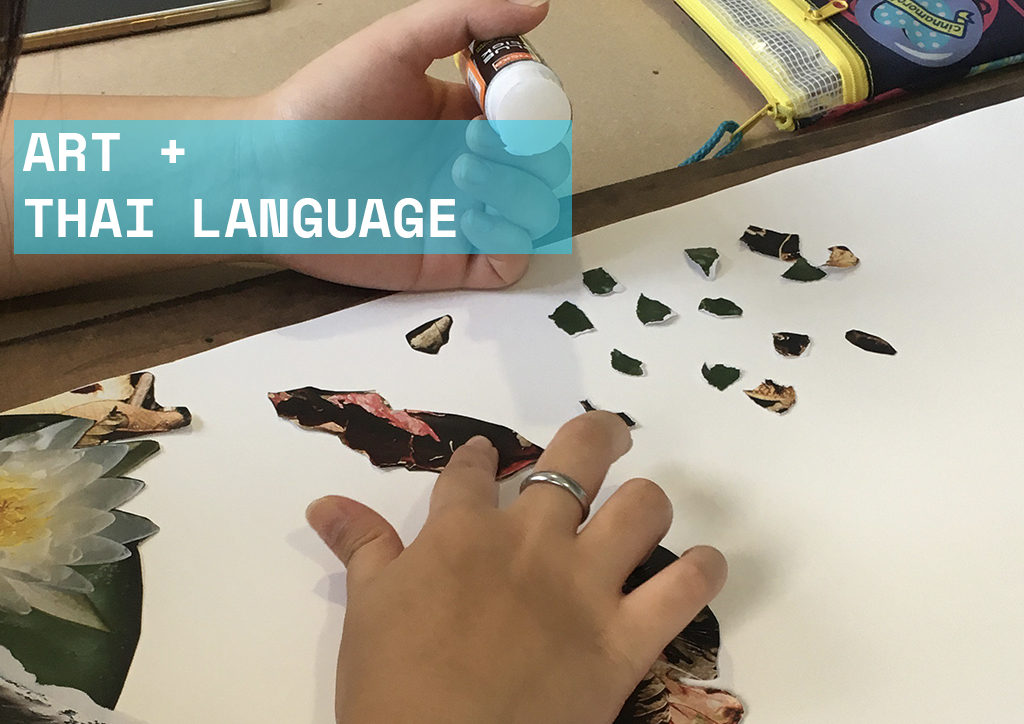
The majority of our student body are Thai students focusing on learning English as a second language. There is, however, also a small percentage of students who are non-native Thai speakers and are learning Thai as a second language. For this collaboration project, I worked with our Thai language instructor and the students in the non-native Thai language class. As these students make up a small community within our school, we wished to give them a special opportunity to explore aspects of Thai culture through visual language.
Students were introduced to the work of Thai contemporary artist, Kamin Lertchaiprasert and the concept of Dhamma and the three universal truths upheld by Theravada Buddhism.
The ‘Before Birth, After Death’ exhibition by artist Kamin Lertchaiprasert showcases some results from the artist’s learning in the form of messages of his own rumination and his immediate dialogues with others. Various ideas from this process were reexamined and recreated in over 730 drawings and 1089 plastic skull sculptures. The artistic process in this collection represents how the artist explores the essence of daily life hidden behind words, and at the same time tries to understand himself, life and the states of birth and death, which exist in nature at every moment.
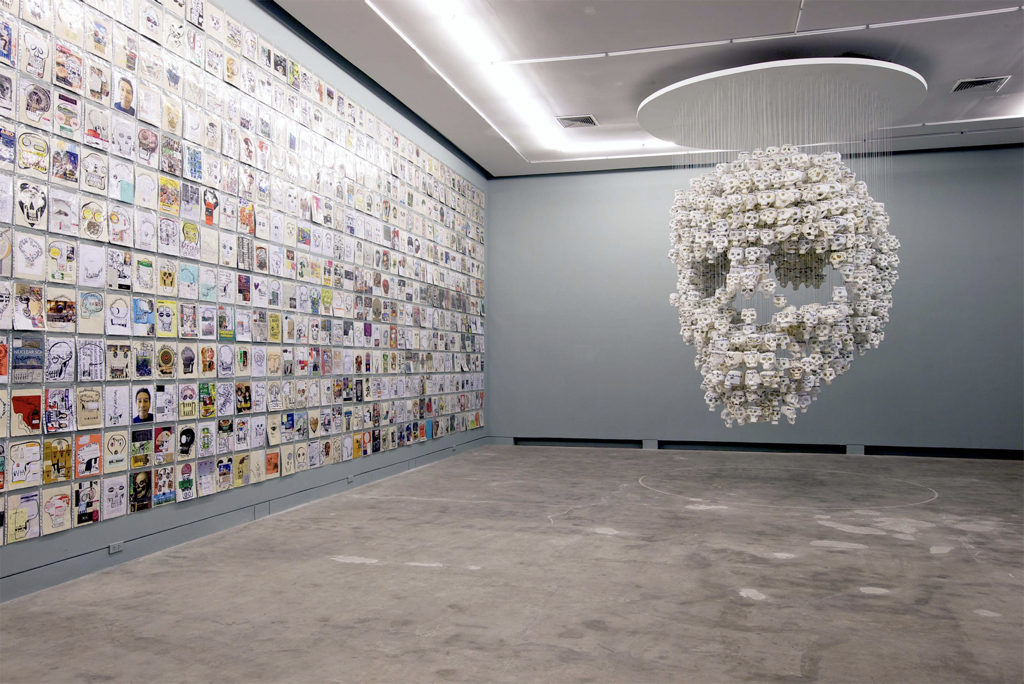
The images represent the artist’s social experience, which affect his daily emotion and thoughts. He brings these images together to create new meaning and contemplate the value of each situation that took place in his daily life.
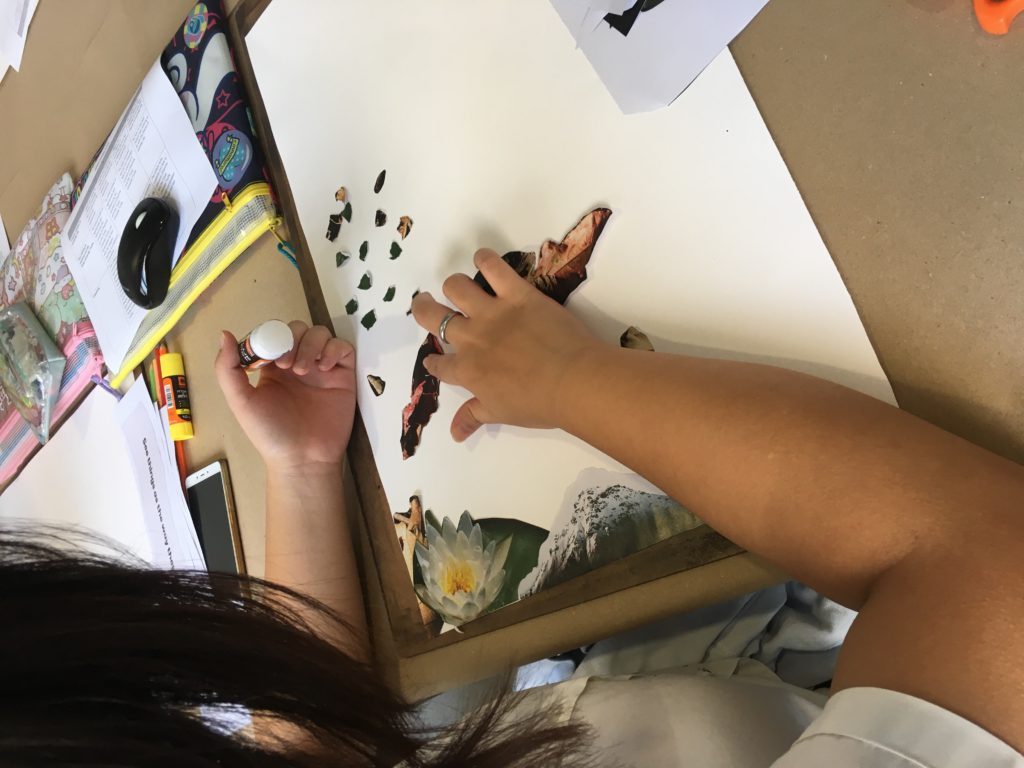
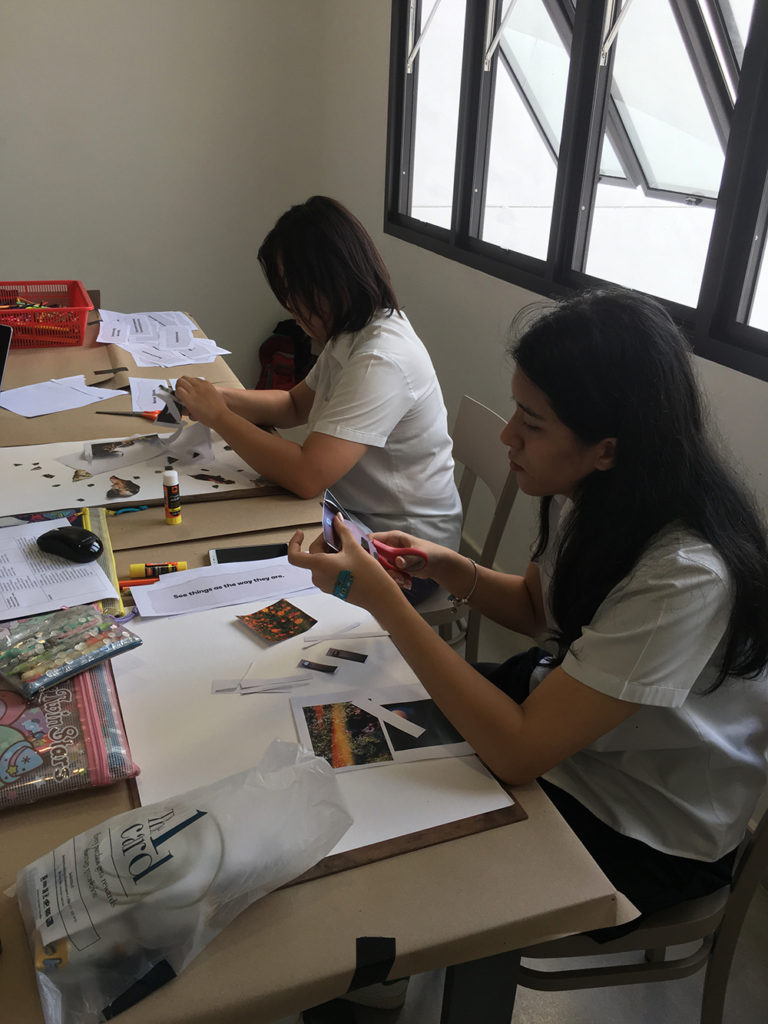
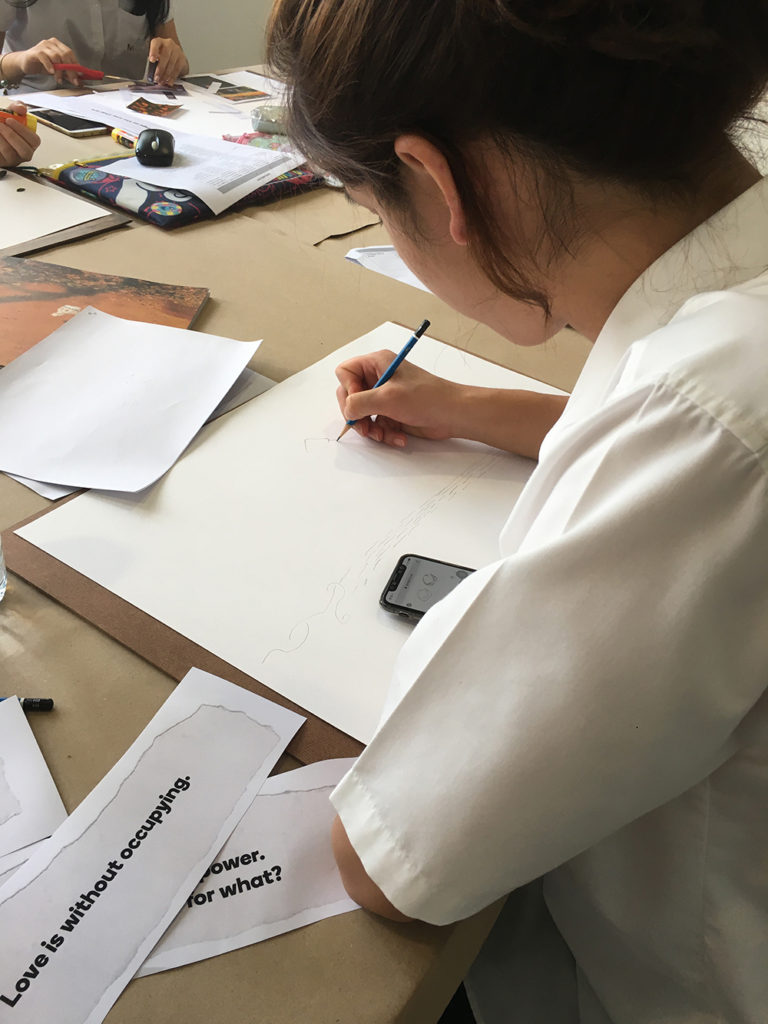
After viewing Kamin Lertchaiprasert’s works, students were invited to create a collage in response to their own daily lives and a phrase related to Dhamma and the Three Universal Truths. Students utilized images downloaded from their social media accounts and selected Dhamma phrases from those provided.
REFLECTION
I often think about the fact that not only are our students trying to learn material and content in subjects that are new to them, but they are also trying to do so in their second language. It is a great challenge and one that they take on in each and every subject that they study. I also often think about art’s ability to function as a language, and one that might at times act as a bridge between various spoken/written languages. I think that this collaboration was successful in its ability to call upon art as a means of providing the students with a tool through which they could explore a foreign language, and a foreign culture through a vocabulary they could recognize [images of their own everyday lives, drawings created by their own hand]. Diversity brings both opportunities and challenges and I am hopeful that this collaboration may have found means to support students in their learning of something new, by calling upon that with which they were already familiar.