AUDIENCE ENGAGEMENT
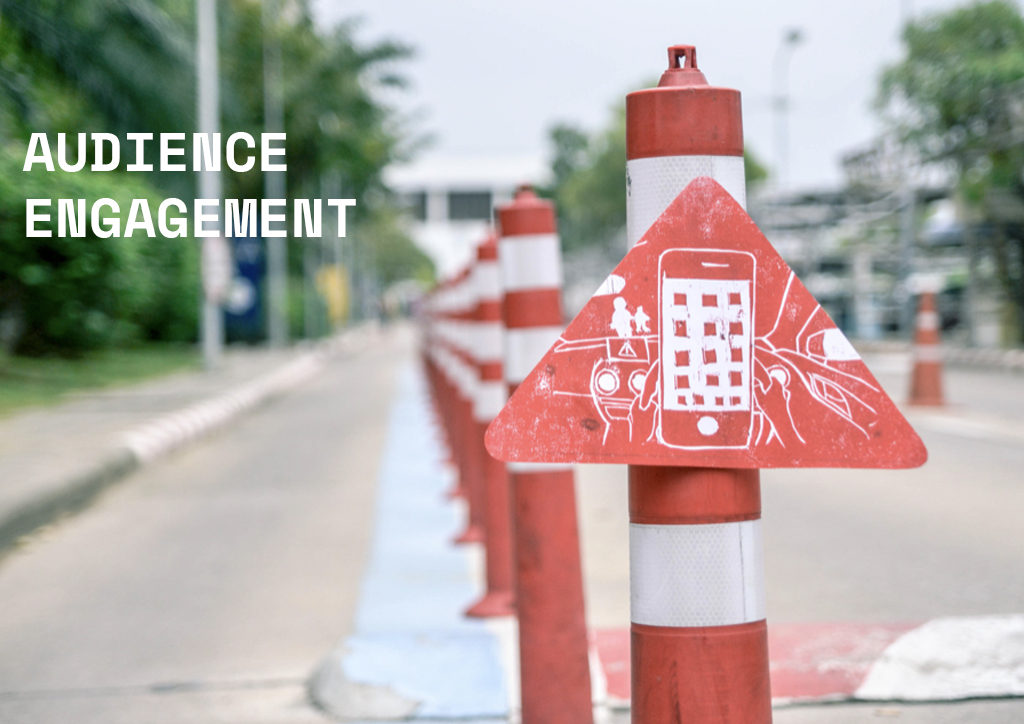
ACTION RESEARCH focused on utilizing ESL strategies corresponding to the concept of AUDIENCE ENGAGEMENT explored within the art curriculum
The printmaking unit incorporated into the core visual arts curriculum is centered around the concept of audience engagement and encourages students to create works where they are giving thought and importance to the role of the viewer. Students select an issue that they feel is invisible in society as the concept behind their work, and then select a fitting location to ‘exhibit’ their work and facilitate a conversation with their target audience around the selected issue. If the works communicate their intentions clearly, and the area for exhibition selected is appropriate, the hope is that they may succeed in engaging their audience in dialog around the issue.
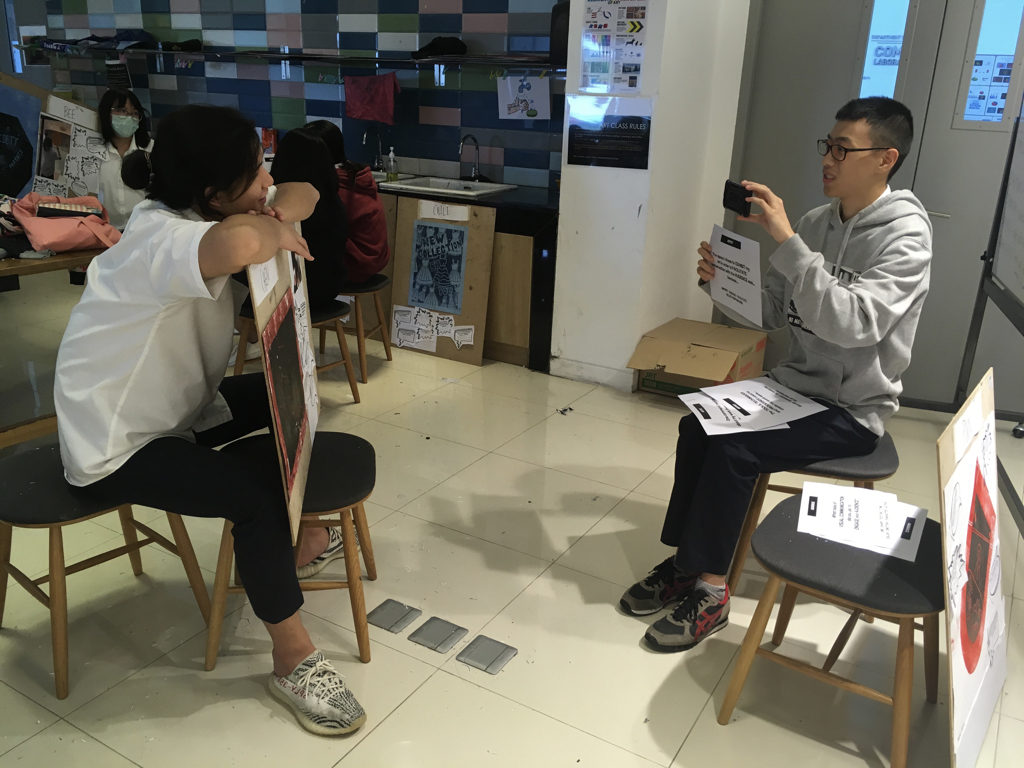
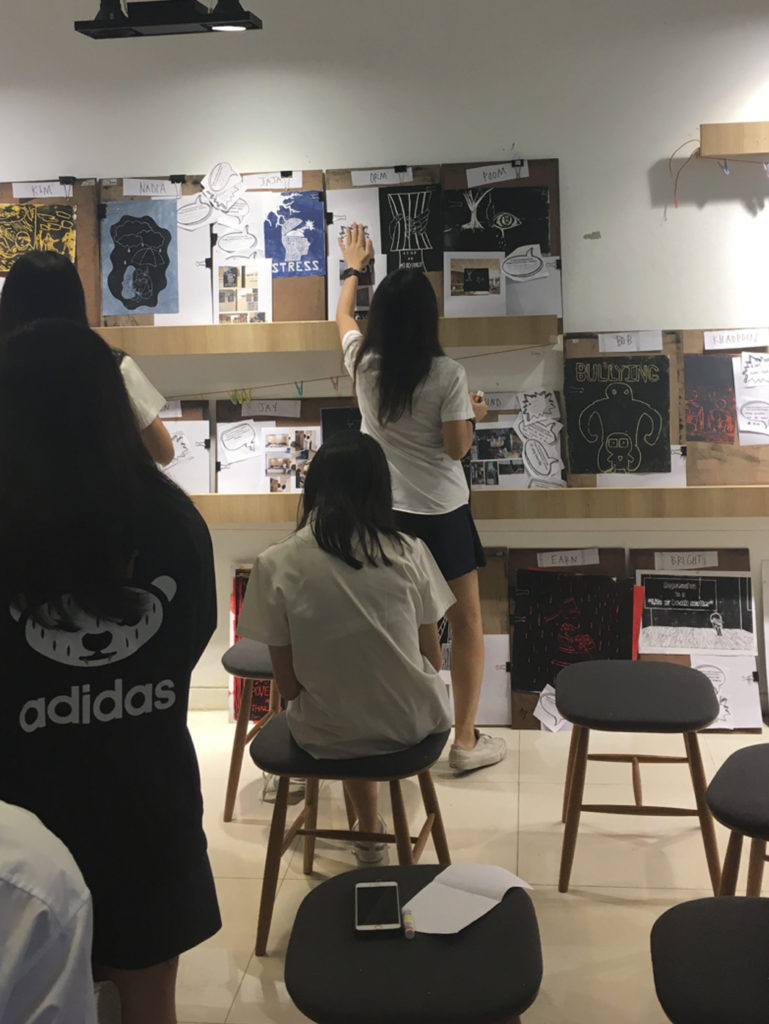
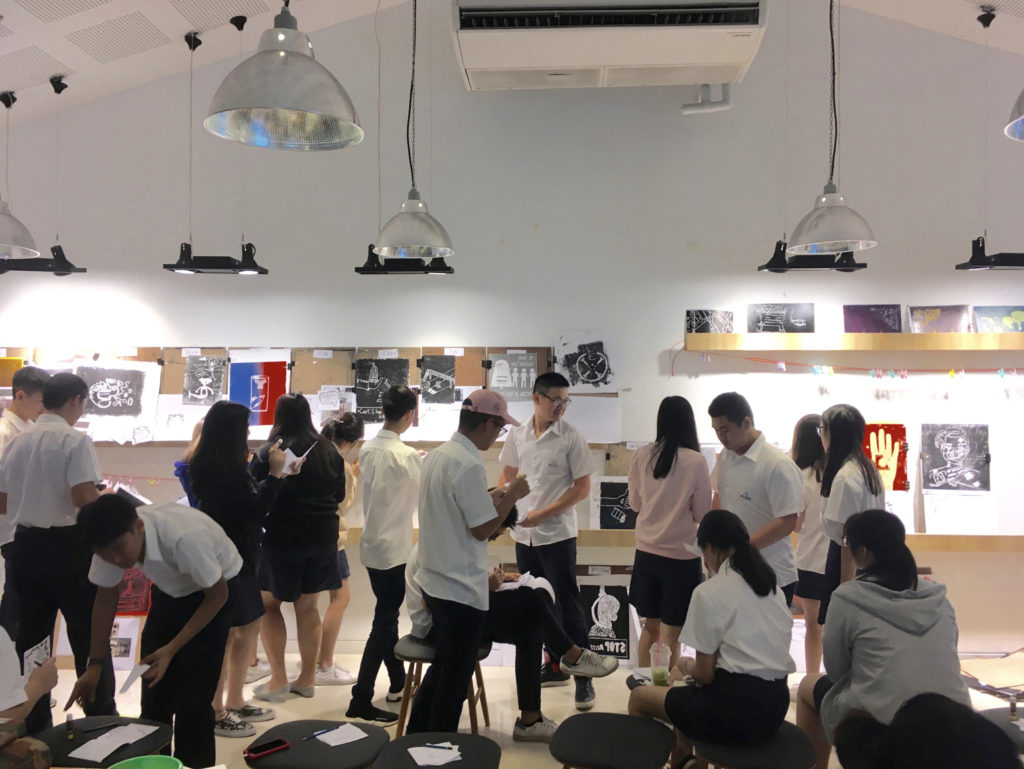
In order for our critique for this unit to further support the concept of audience engagement, we group the students in pairs, with one playing the role of the artist and the other taking on the role of the audience. The students are situated across from one another, with the artist holding a board displaying both a copy of their artwork and a photograph of where they exhibited this work in the public sphere. The idea is that the student taking on the role of the audience member can imagine that they are coming across this artwork in the exhibition space portrayed within the photograph.
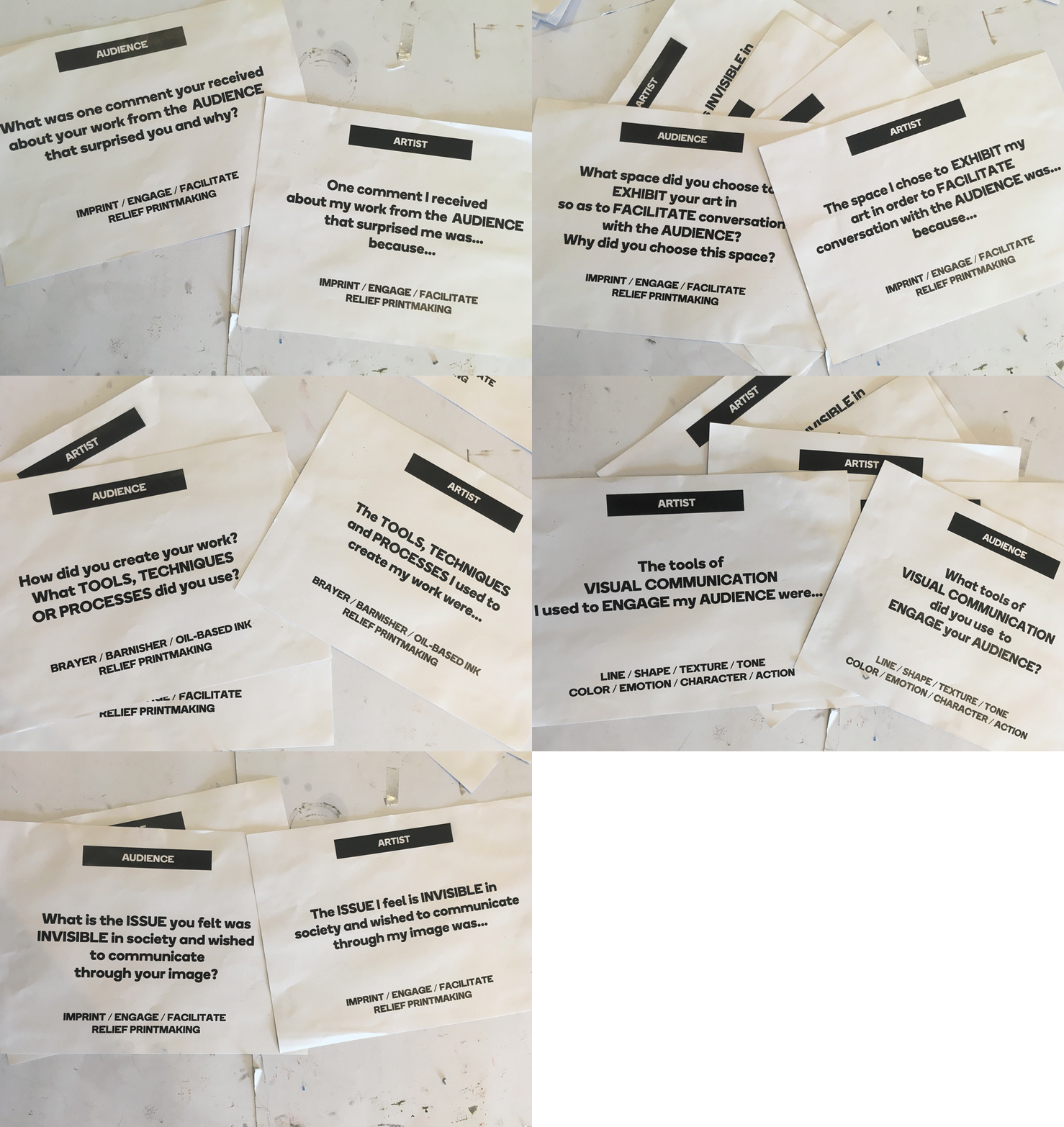
Students are next provided a set of five sentence stems formatted as cue cards. One one side of the cue card is a sentence stem prompting the student playing the role of the audience member to engage the artist in dialog around the issue depicted within their artwork. On the reverse side of the cue card is a sentence stem assisting the artist in formatting their reply. Each side of the cue card further includes relevant art vocabulary that can be incorporated into questions/answers by the students.
The student who is playing the role of the audience is asked to also video record the artist’s responses to their questions, offering them what is described as an opportunity to not only engage in dialog around the issue portrayed in the image, but also glean insight into the inspiration behind its creation, and placement through direct conversation with its creator.
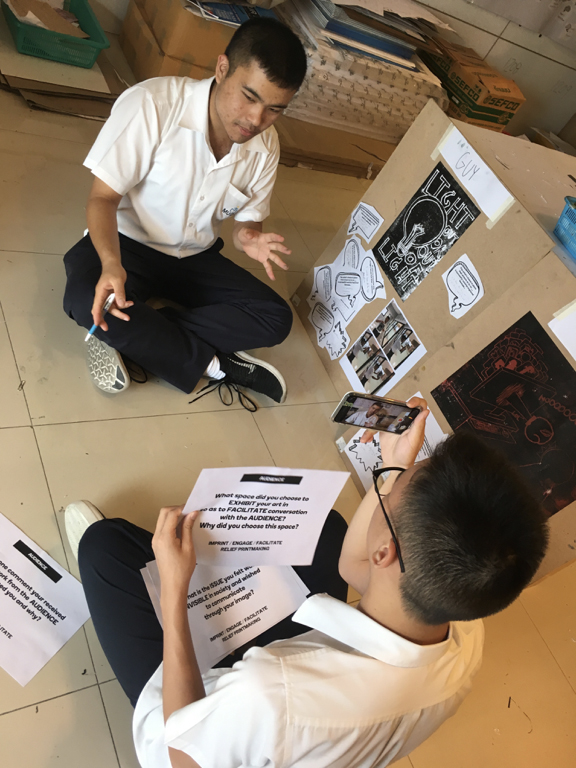
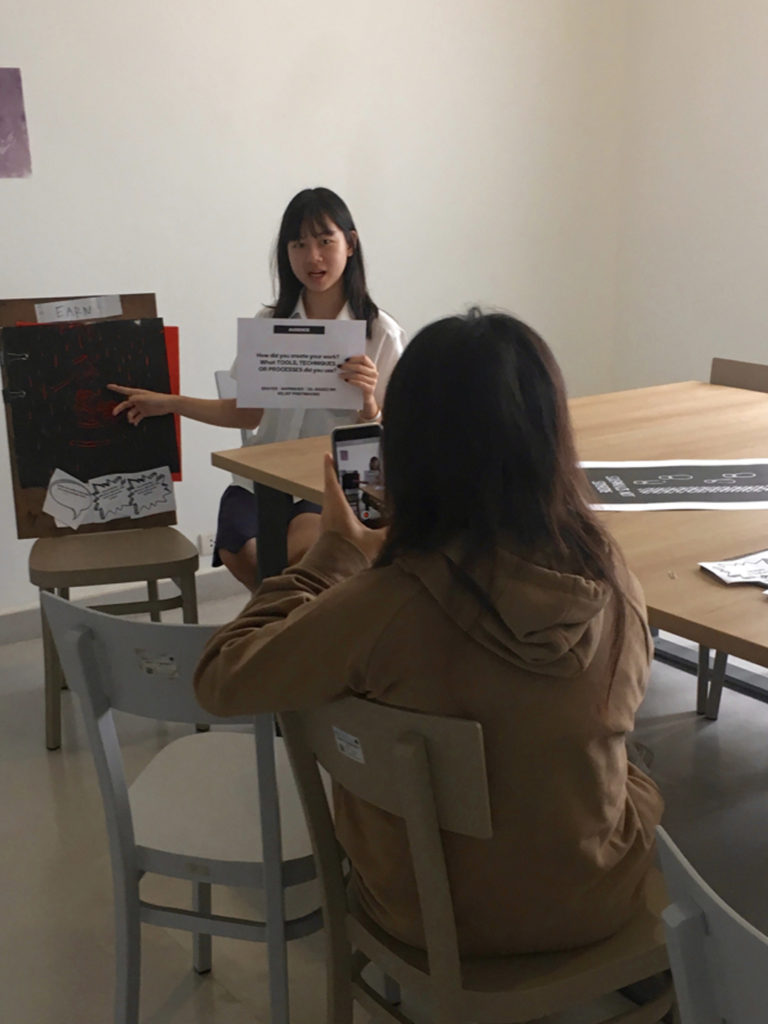
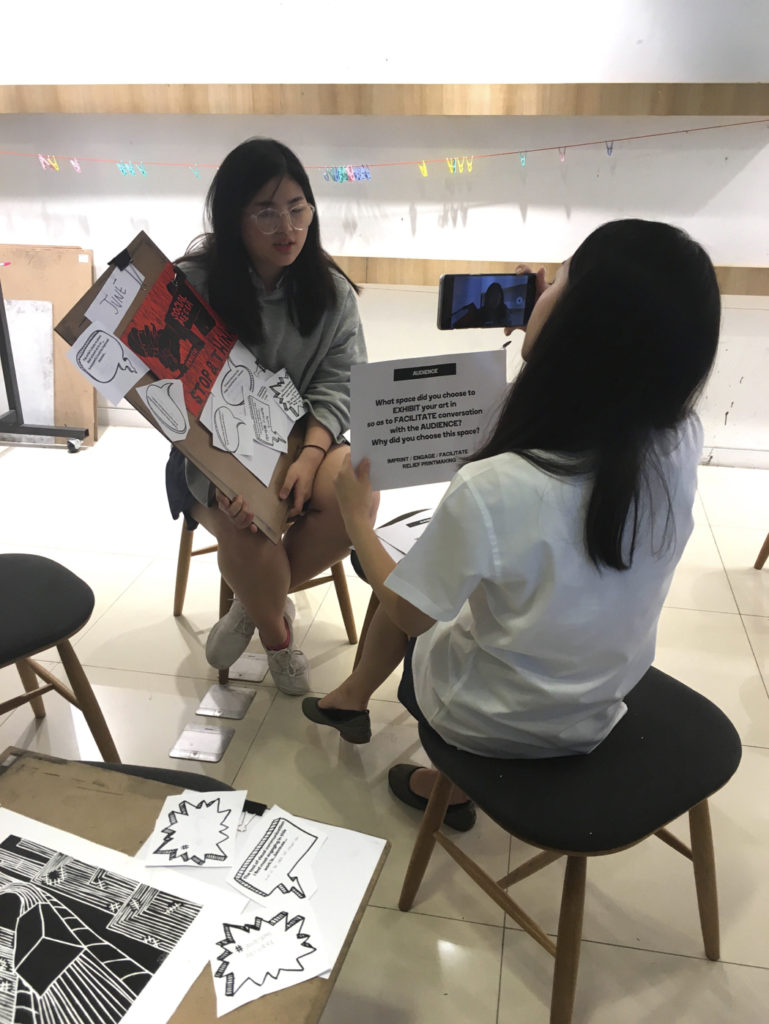
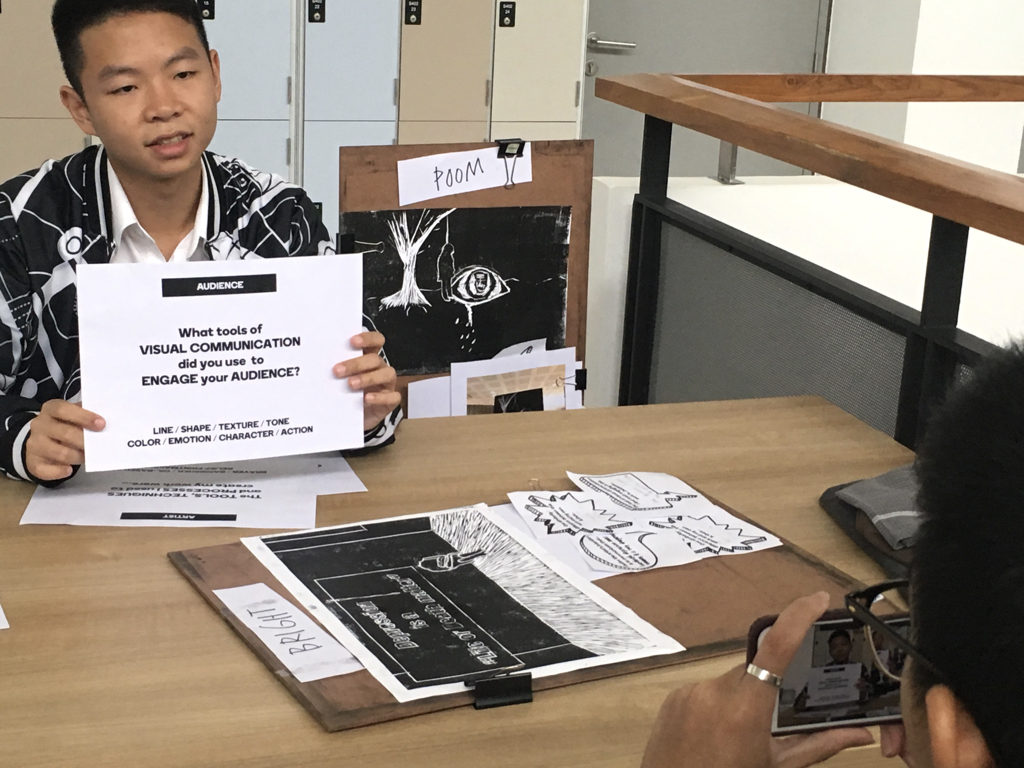
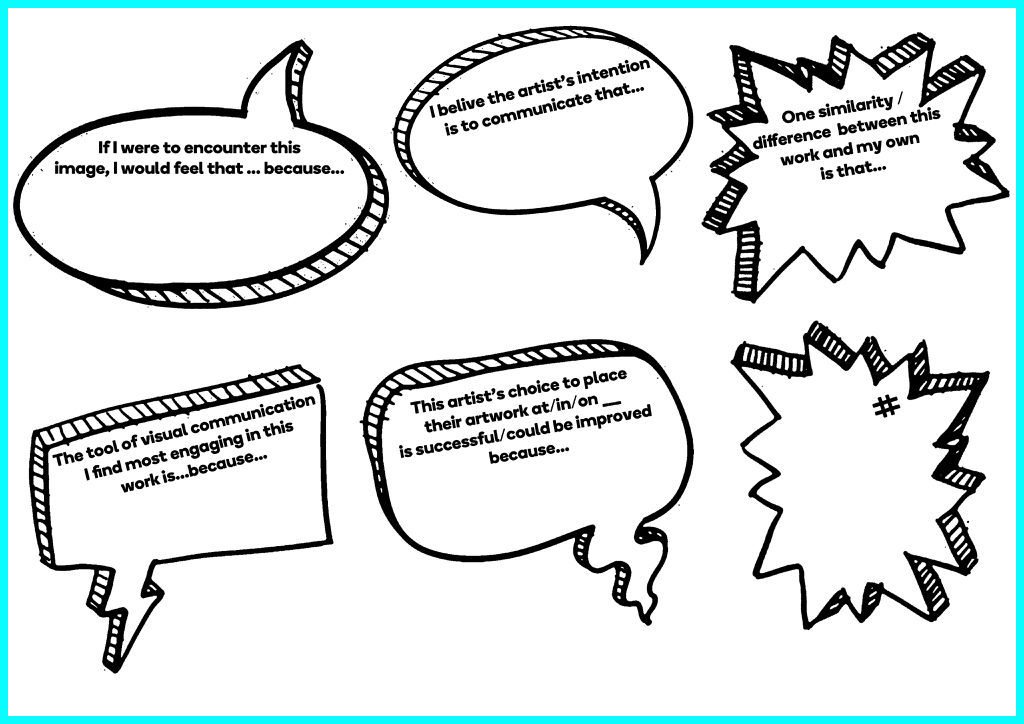
After the artist has answered all of the provided questions and engaged the audience member in dialog surrounding their work, the students switch roles. Following, the boards displaying the works and photographs of their placements in the world are returned to the gallery in the art room. Students now take on the sole role of the audience and are given comment prompts on thought bubbles and offered the opportunity to ‘engage in conversation’ with any of the works that appeal to them. Students leave comments for one another beneath the works, all the while imagining that they are being encountered in the locations depicted in the photographs.
REFLECTION
It was interesting to me how easily the students got on board with the idea that the role the audience plays has relevance within creative practice. Students were able to determine a target audience for their selected issue with ease. They struggled, however, in thinking about where to physically put their works and needed more assistance than I anticipated in linking the concepts explored within their images with actual, physical locations out in the world. I wonder if this struggle has anything to do with the amount of time they spend in the virtual world, where the issues they are learning about and speaking about through their works aren’t necessarily happening in places they have ever, or perhaps will ever, actually visit themselves. How do the ways in which students consider engaging an audience change when our visual, physical worlds are becoming increasingly virtual? As I move forward with this unit it might be of value to consider how I can utilize the project as a platform to not only engage students with their audience but also encourage them to reclaim a physical connection to the spaces those audiences [and they themselves] inhabit.