COLLABORATION
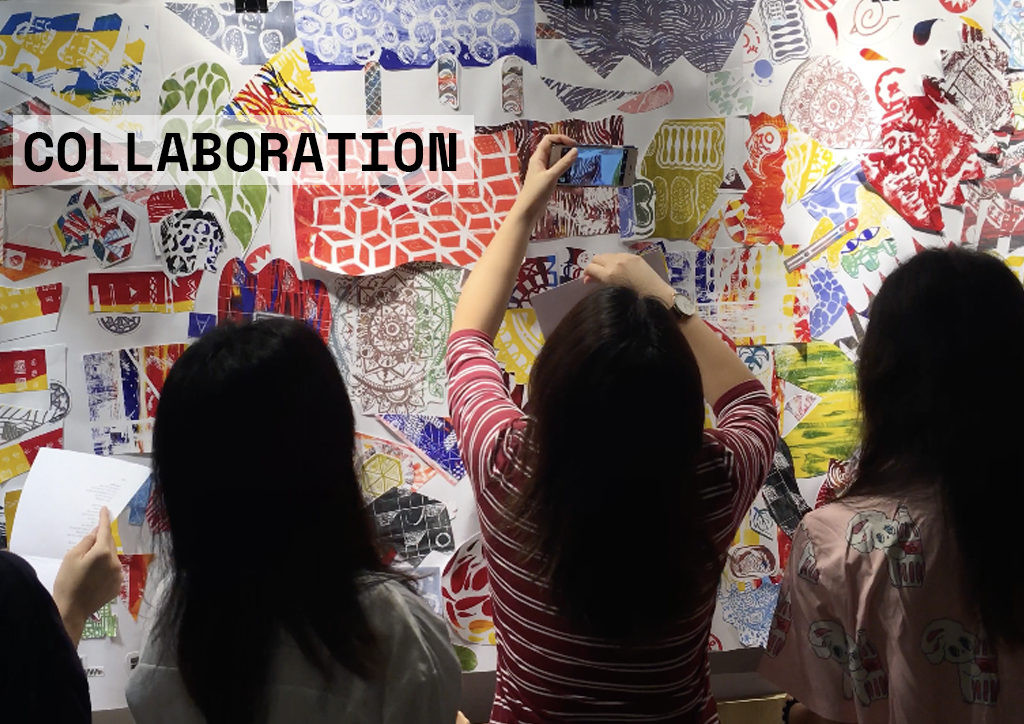
ACTION RESEARCH focused on utilizing ESL strategies corresponding to the concept of COLLABORATION explored within the art curriculum
The visual arts curriculum features one unit focused on collaboration each semester. The details of the project explored within the unit vary each term in response to what opportunities present themselves to collaborate with other disciplines. For this particular semester, I was interested in finding an opportunity for students to build further parallels between written/spoken language and visual language. We, therefore, called upon works the students had created in their English class as a source of inspiration, and in particular, those works created during their poetry unit.
Students were asked to ‘donate’ a poem they had composed during English class to our poetry bank which they were told we would revisit later. Secondly, students were invited to create an equally diverse ‘bank’ of abstract imagery, utilizing pattern, shape and screen printing as means of generating visual forms.
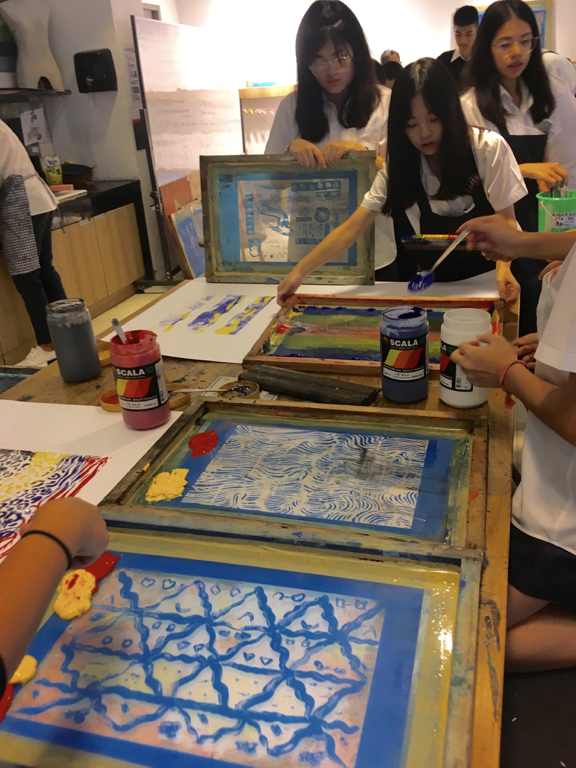
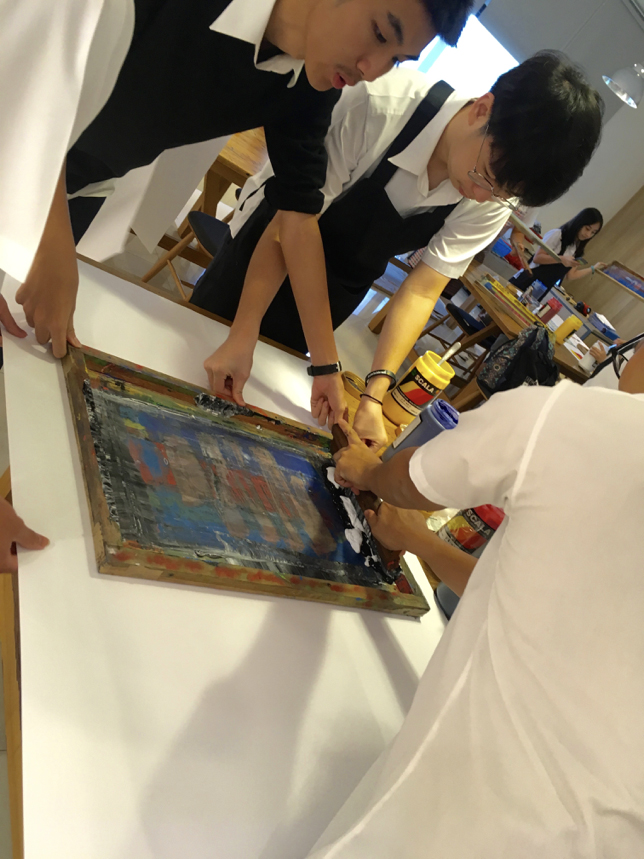
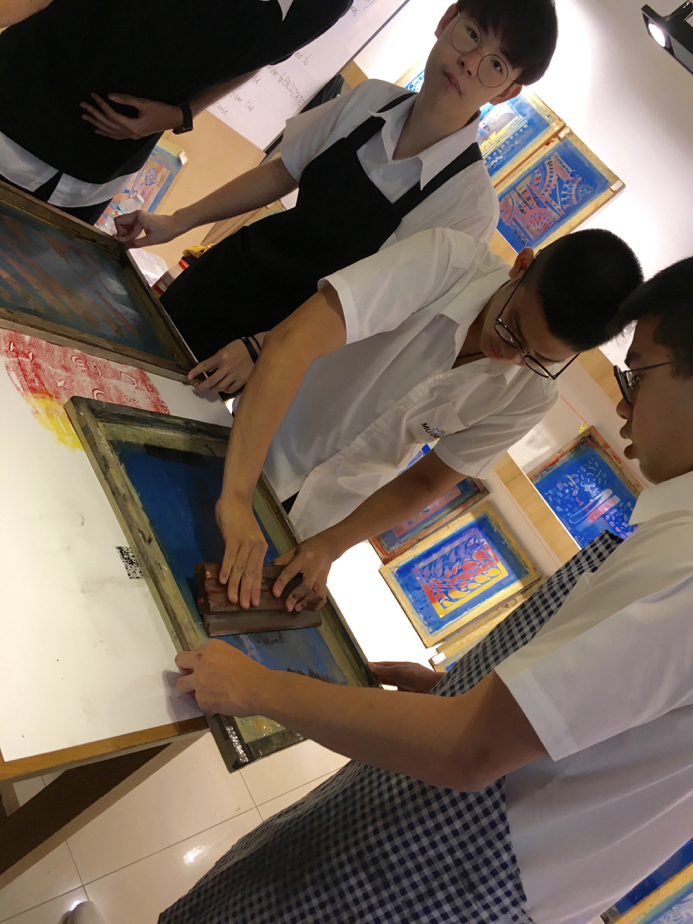
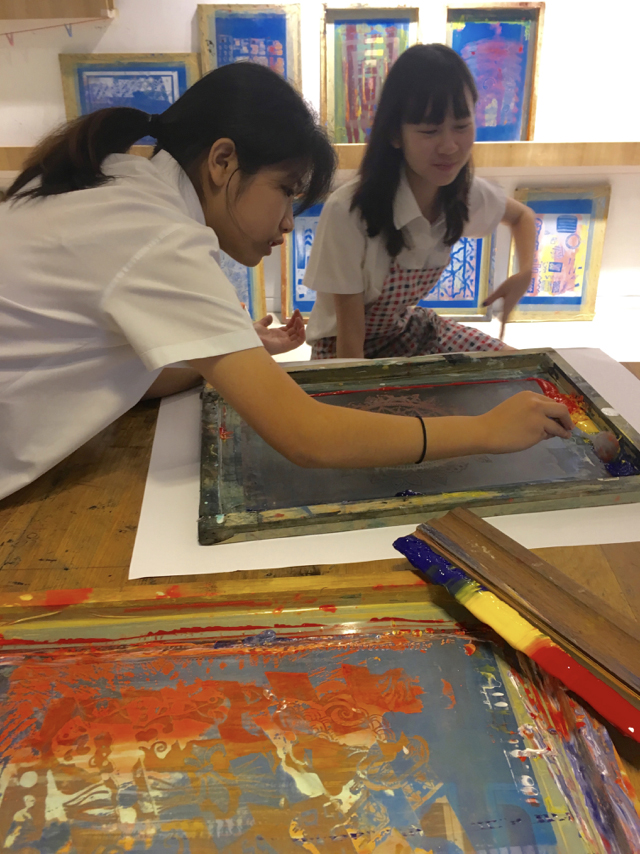
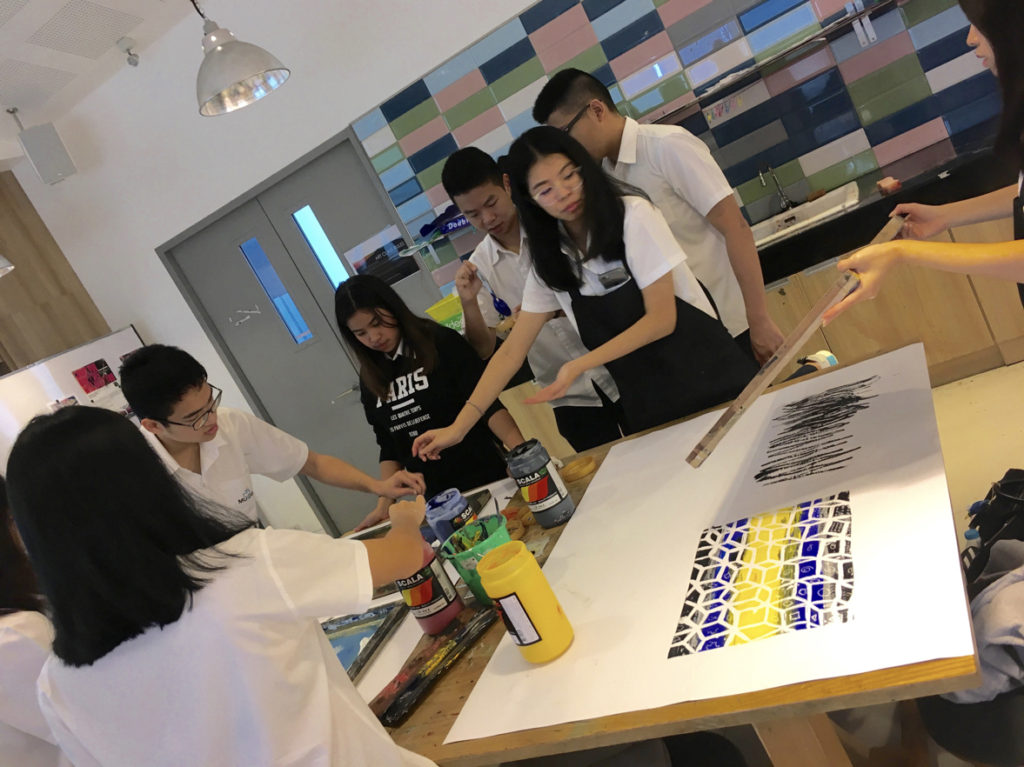
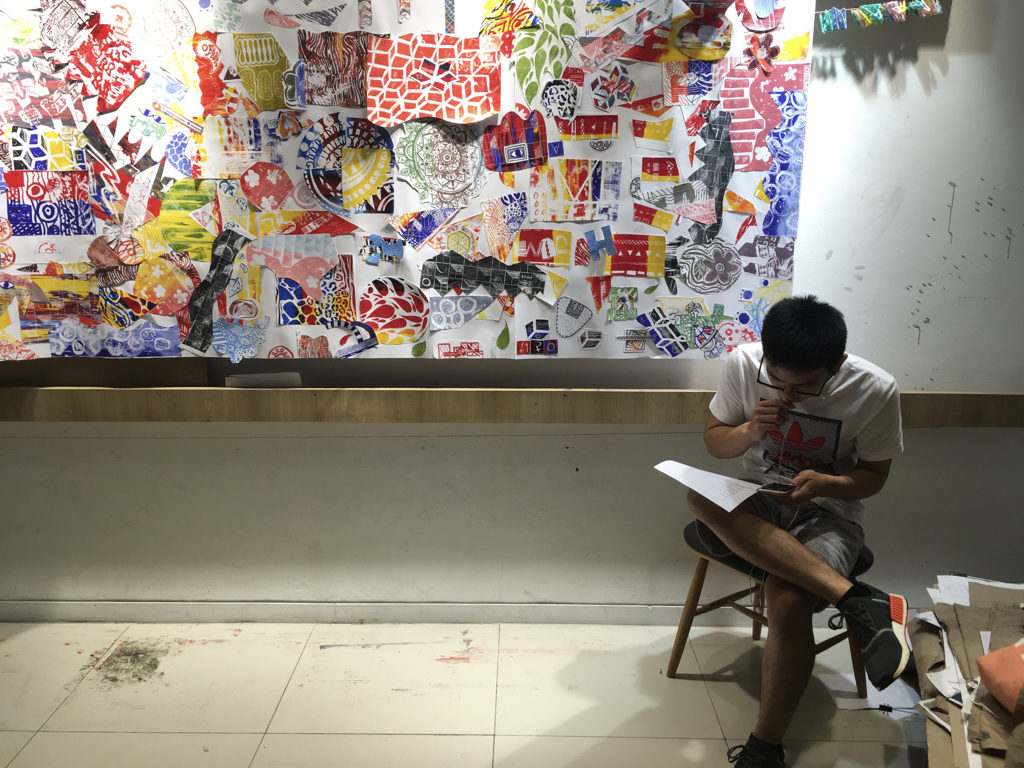
Students worked together to create and print the visual images which were then displayed for them in a large grouping. Students were asked to utilize collaboration to firstly deconstruct [through cutting] and then reconstruct [through gluing] the images together into one large collaborative work of art. Students were encouraged to let go of their individual intentions and focus on how they could call upon and assist one another to build an image greater and more diverse than they would be able to produce on their own.
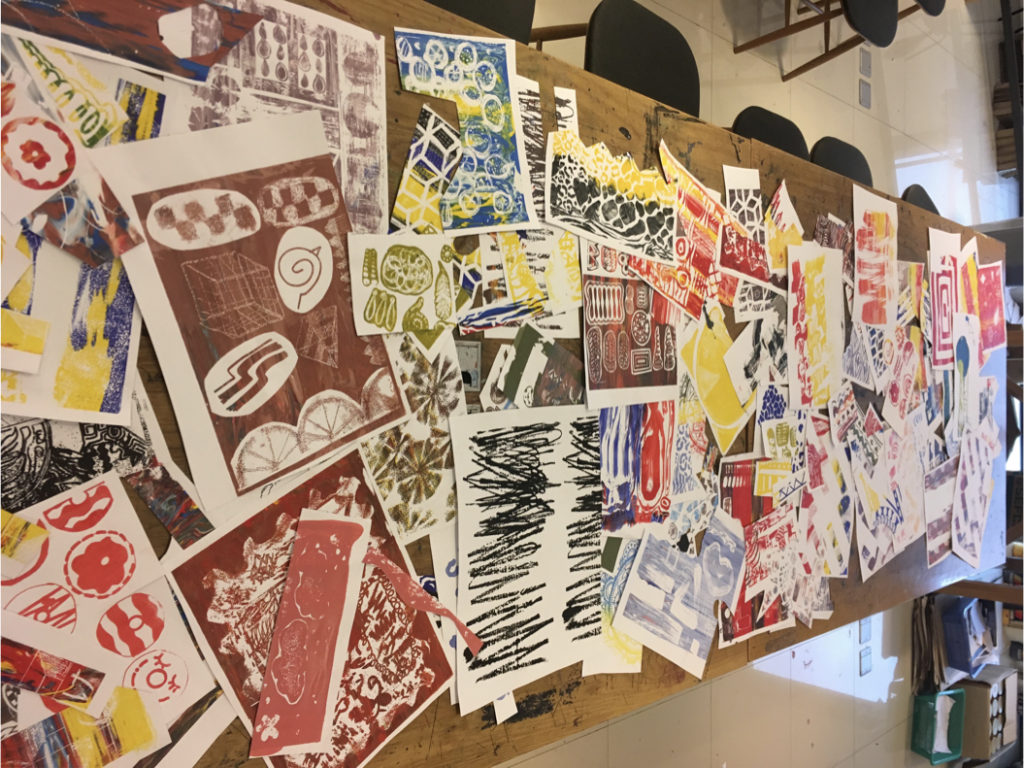
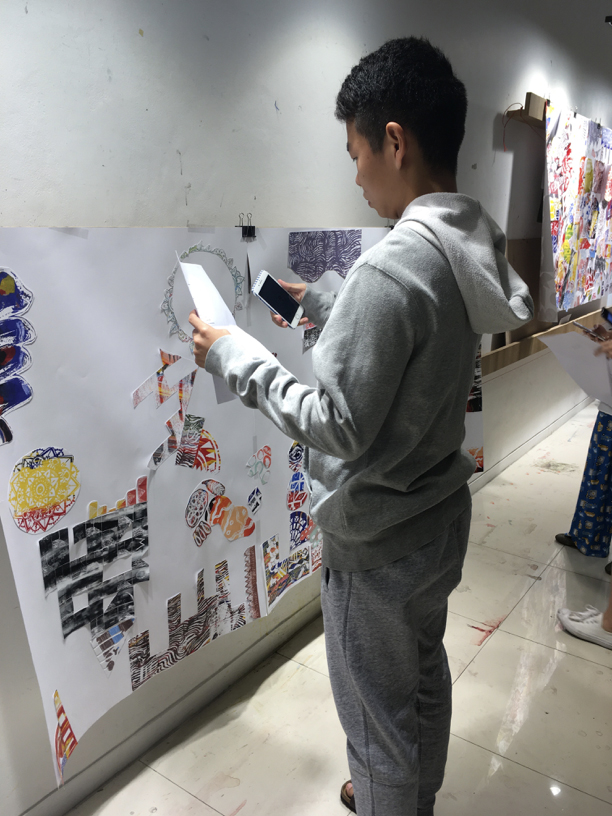
Secondly, students were each given a copy of one poem from the poem bank. Poems were assigned to students at random with the only restriction being that they weren’t working with their own piece of writing. The students were then asked to creating pairings and find parallels between the written language utilized to communicate the poem and the visual language generated within the collaborative abstract artwork.
Students recited and recorded the poems they were given, collecting them as audio files. They then worked to capture a visual rendition of the story they felt their poem communicated by video recording selected elements of the abstract artwork. This visual language was lastly paired with its audio equivalent resulting in a work of video art where the written [now spoken] language and visual language were connected and granted equal value.
REFLECTION
Upon viewing the students video works I felt that while I had intended for the use of abstract imagery within the project to offer them greater freedom and facilitate ease of pairing with the written/spoken language due to the open nature of its symbolism, some of the students struggled to find meaning within the symbols and colors. They, therefore, found it difficult to pair the imagery with the spoken language and made many of their choices in a manner that felt, at best, random. It may be interesting to try this assignment again but offer them the option of creating the imagery based on the words composed – the challenge for me will be how to facilitate such in a manner that while offering more options in terms of drawing parallels between written/spoken language and visual language, also succeeds in discouraging the use of very literal/obvious symbolism as visual representations of the poems.