Are all characteristics of the art room dependent on the physical space? Can virtual methods be utilized to reconstruct and replicate the art room environment?
VIRTUAL ART ROOM
If I were asked to describe the environment of the art room at MUIDS, words that might come to mind would be things like “warm,” “welcoming,” and even (and I am quoting from a student here) “an oasis.” This is in part because of the physical architecture itself, with our huge floor to ceiling windows, balcony, warm lighting, plants and wood furniture, but I believe that it is also due to the overall vibe that I (with the help of our students) have tried to foster within that space. The art room is a place where self-expression is encouraged, censorship shunned and the student-created playlist welcomed as an integral element of workshop days. We feel good in the space and we do good work there. As we moved through our first few weeks of online learning I became acutely aware of how much I relied on the physical space of the art room, and the atmosphere we had carved out within it, to support the sense of comfort required for students to find their confidence to truly be creative. As mentioned, however, these qualities of the art room aren’t solely drawn from the physical space alone and, with that in mind, began to wonder which aspects of the “art room vibe” were really locked within the physical walls of the school – could virtual methods be utilized to reconstruct and replicate the art room environment?
My initial idea and the seemingly most straight forward way to investigate these questions seemed to be by attempting to create a virtual likeness of the physical space. My thought was that, if I could build the space, the sense of openness and creative risk-taking its physical counterpart supported would follow. I therefore dove into exploring what platforms for development of virtual environments were available and settled on gather town, a free and customizable virtual environment that prides itself on making time “spent with your communities just as easy as real life.” I learned the ins and outs of the functionalities and utilized photoshop to “build” a virtual replica of the art room we had left behind.
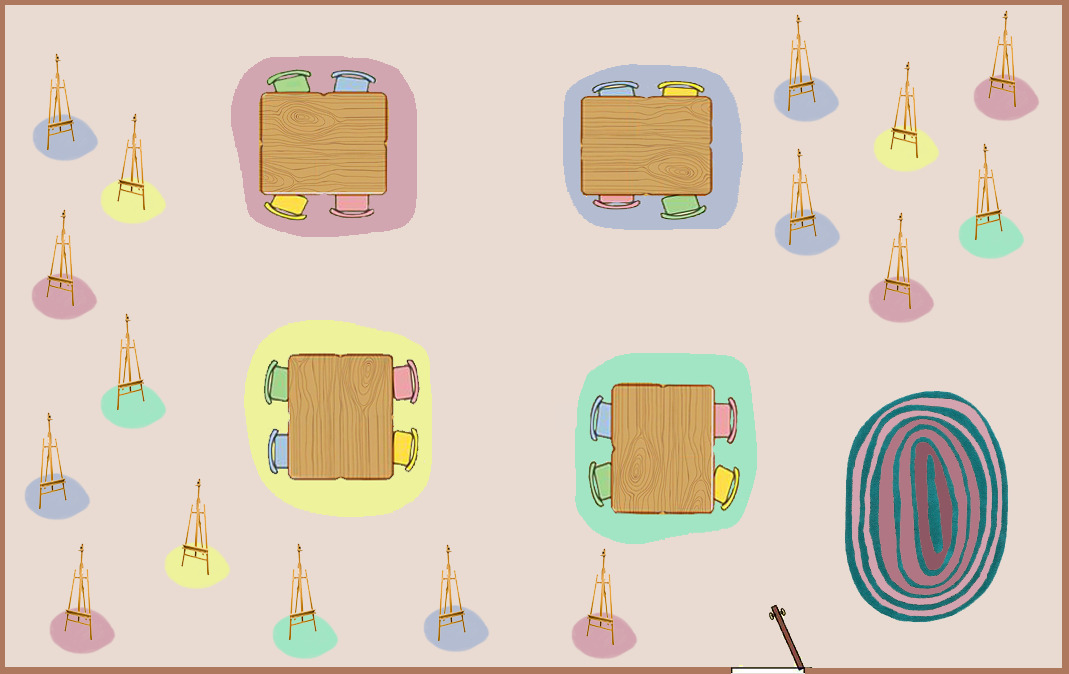
While this virtual art room somewhat successfully resembled the physical space, I wanted to also find means to embed new functionalities within the room that could be reminiscent and supportive of the environment, or “vibe” if you will that the kids know and love to be waiting for them behind the art room door. I incorporated various different “features” into the virtual art room in my efforts to achieve these goals.
VIRTUAL ART ROOM FEATURES:
THE MAGIC CARPET:
The magic carpet has the functionality of allowing for anyone standing on it to be heard from anywhere within the room. One of the great things about gather town is that you can only hear and speak with those who you are “near to.” This allows for interactions to feel more natural as you can move around the space and speak with those who you choose to engage with and/or cross paths with. The carpet provides a necessary complement to this function in its ability to act as a stage of sorts, upon which anyone can walk and share (or rebut) an idea and know that their voice will be heard at equal volume to everyone else’s and within all corners of the space.
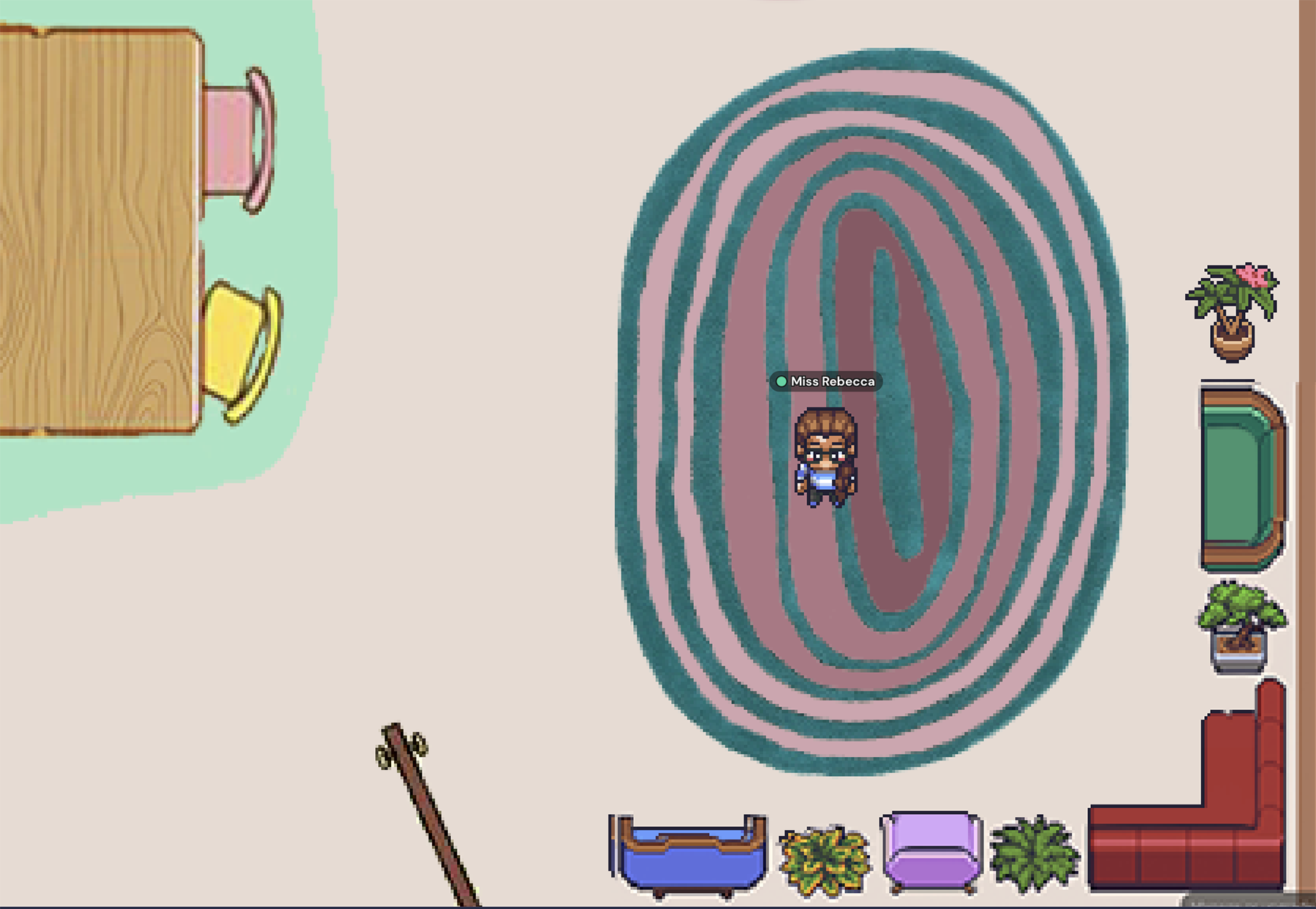
Another way to think about this is that, in Google meet for example, if you aren’t utilizing break out rooms, the entire meet is standing on the carpet. Students do not have the ability to speak one-on-one with the teacher, (or with one another) with ease or in any way that feels even remotely fluid/natural. Gathertown solves this by allowing for multiple conversations to be held at once, and the carpet provides the additional (and in my opinion necessary) functionality of acting as an in-class “mic” that can be accessed by all when needed. I can give instructions to all from this space, and then move around the room to interact and check-in with students individually. While simple to implement, this function made a world of difference in creating what felt like a more natural, open and supportive environment for sharing and discussing ideas as well as providing feedback.
THE SKETCHBOOK SHELF:
A signature element in the art room at MUIDS are our plastic colored baskets filled with student sketchbooks that line the front of the room. Their physical placement encourages students to pick them up immediately upon entering the space and provides them with a physical object that holds the means to immediately transport them back to the page/thought/space they were in and engaged with at the end of the previous class. Gathertown allows users to utilize interactive objects as visual tools that can be embedded with various functionalities including linking to other websites. I took this opportunity to install a nice red bookshelf at the front of our virtual art room that links to a google drive folder where each student is provided with a digital sketchbook, also known as a google slideshow.
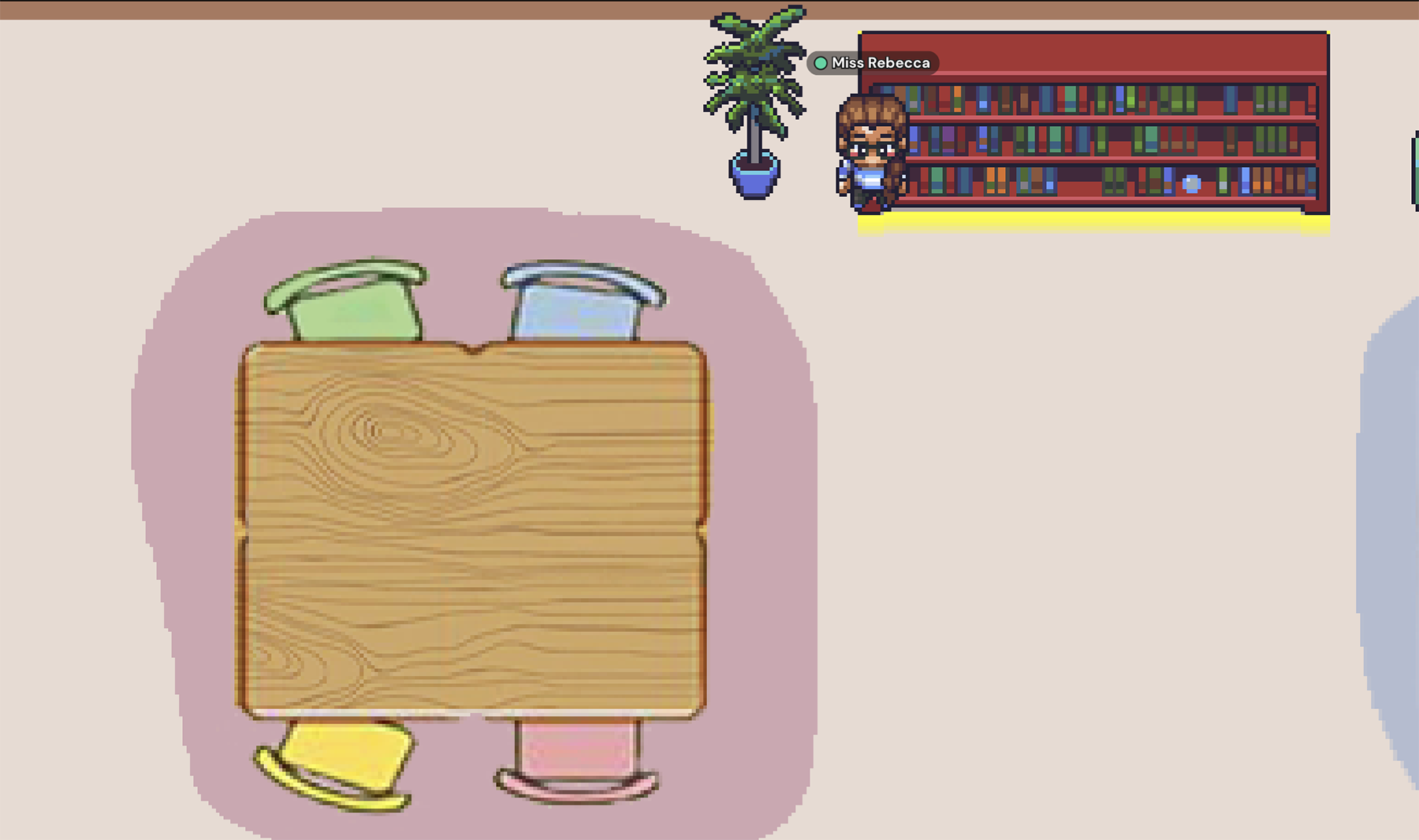
Another function of the sketchbooks that I often use within a normal onsite setting is to utilize their pages to provide individual comments to a student. Students can open their book and “find” and respond to these comments during class. This method of passing a message to them gives them time to think about the comment before being asked to respond, and also acts as a way of incorporating feedback right alongside their visual documentation of their thinking/working process that the comments are referring to. In my opinion this allows for feedback (and reflection) to find space WITHIN the process of creating rather than simply being tagged on at the end. I tried to amplify this function of the sketchbook in the digital format through the incorporation and utilization of “comments” left on pages by not only myself but also fellow classmates, and invited students to follow the links to and browse through not only their own books but also those of their fellow classmates often. I feel that this functionality and the willingness to open up to one another it required succeeded in fostering a “we are all in this together” type of feeling amongst the students and also succeeded in encouraging them to give value to not only the finished works they were producing but also their experimentation and the journey of getting there that their sketchbooks document.
STUDIO HABITS OF MIND:
While creating a virtual representation of the physical art room, as well as replicating (and perhaps expanding upon) some of the functionalities of the objects that it holds such as sketchbooks, I wanted to also explore how I could bring the “ways of thinking” and engaging with creative practice that happen within that space into our virtual art room as well.
The Studio Habits of Mind are teaching tools developed through Project Zero at Harvard University that describe the “thinking that teachers intend for their students to learn during the process of creating.” I am a big fan of the Studio Habits of Mind and thought that they could function as a useful tool from which to investigate this idea of constructing, or facilitating “ways of thinking” within a virtual space, due to the flexibility of their implementation, and the diverse ways in which they can be applied to creative processes.
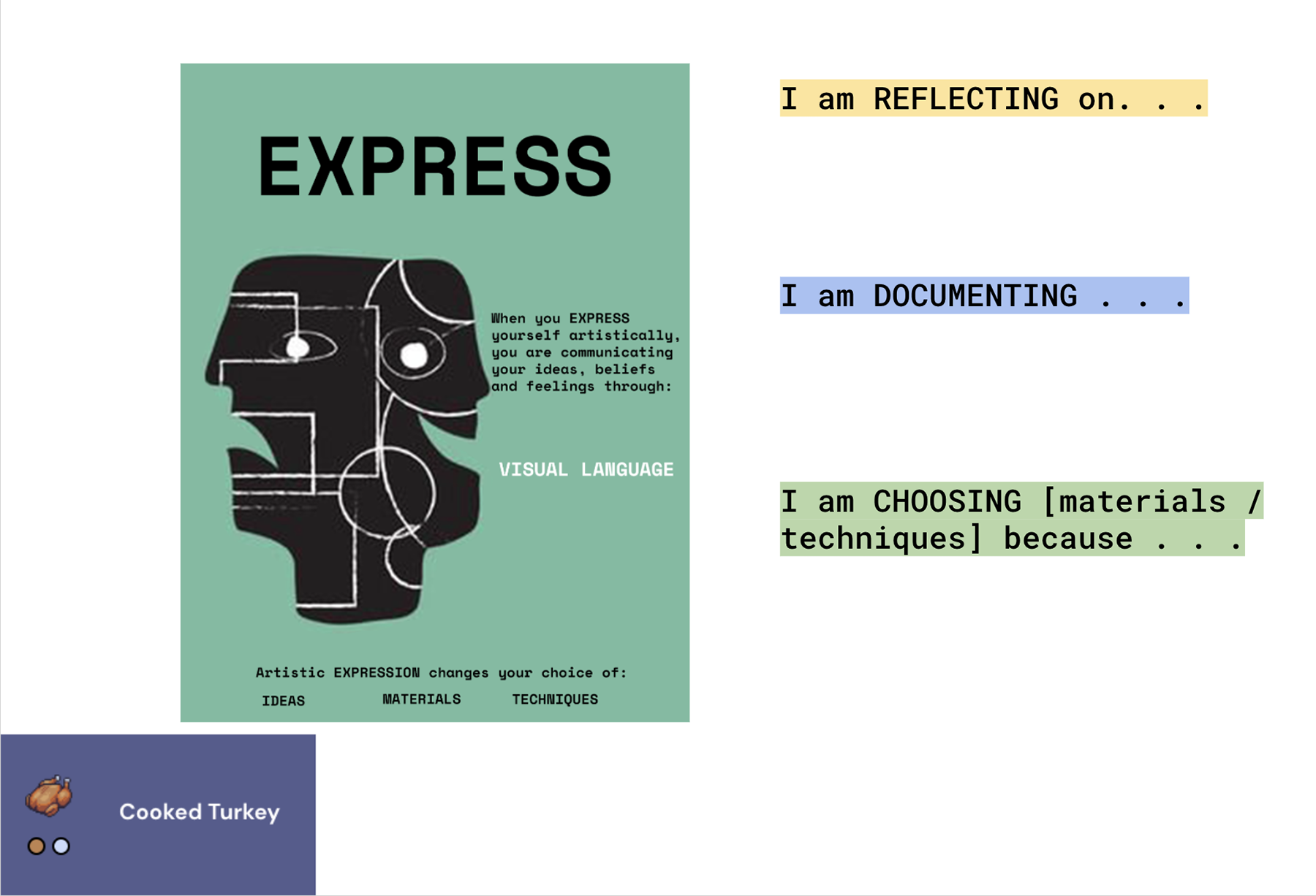
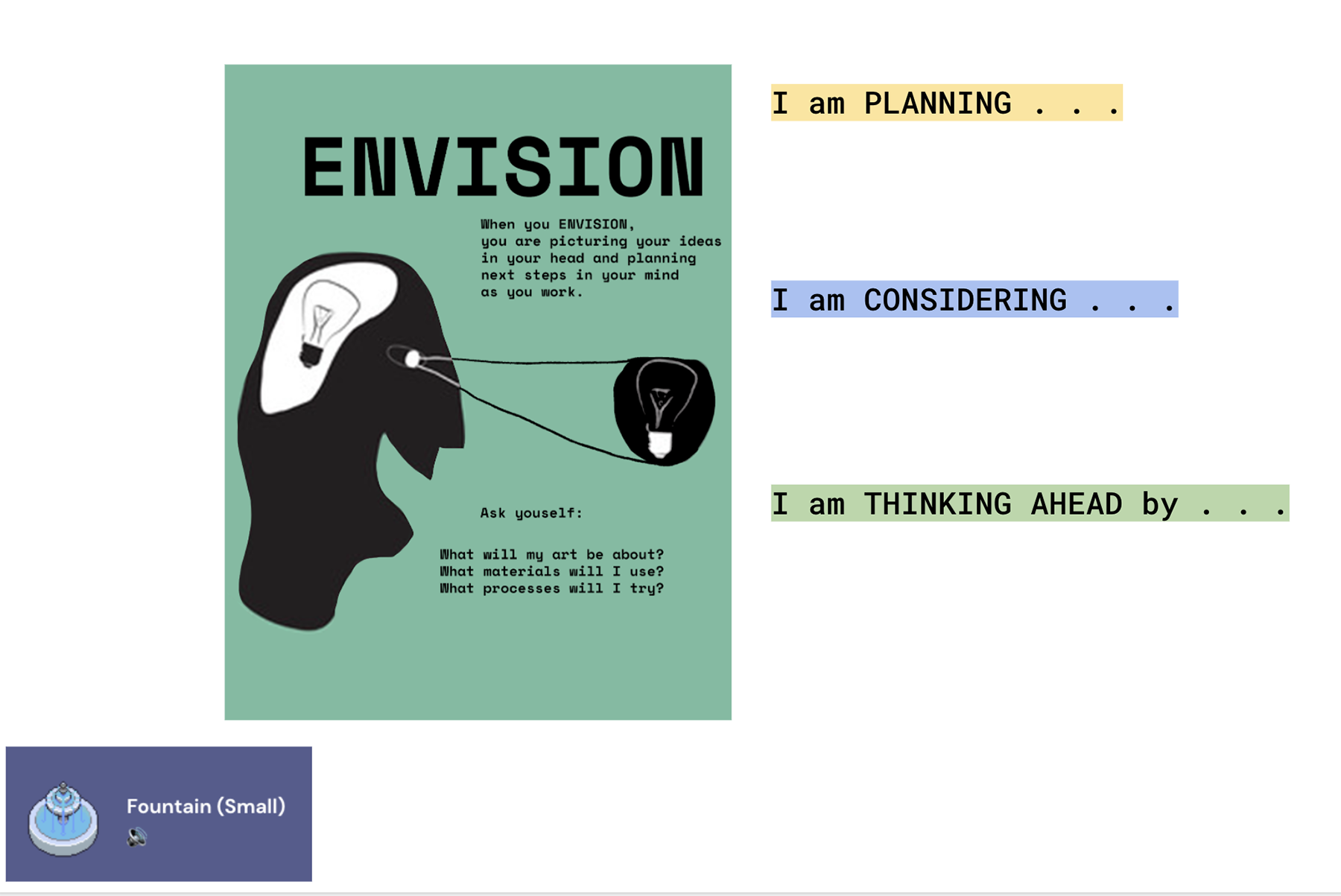
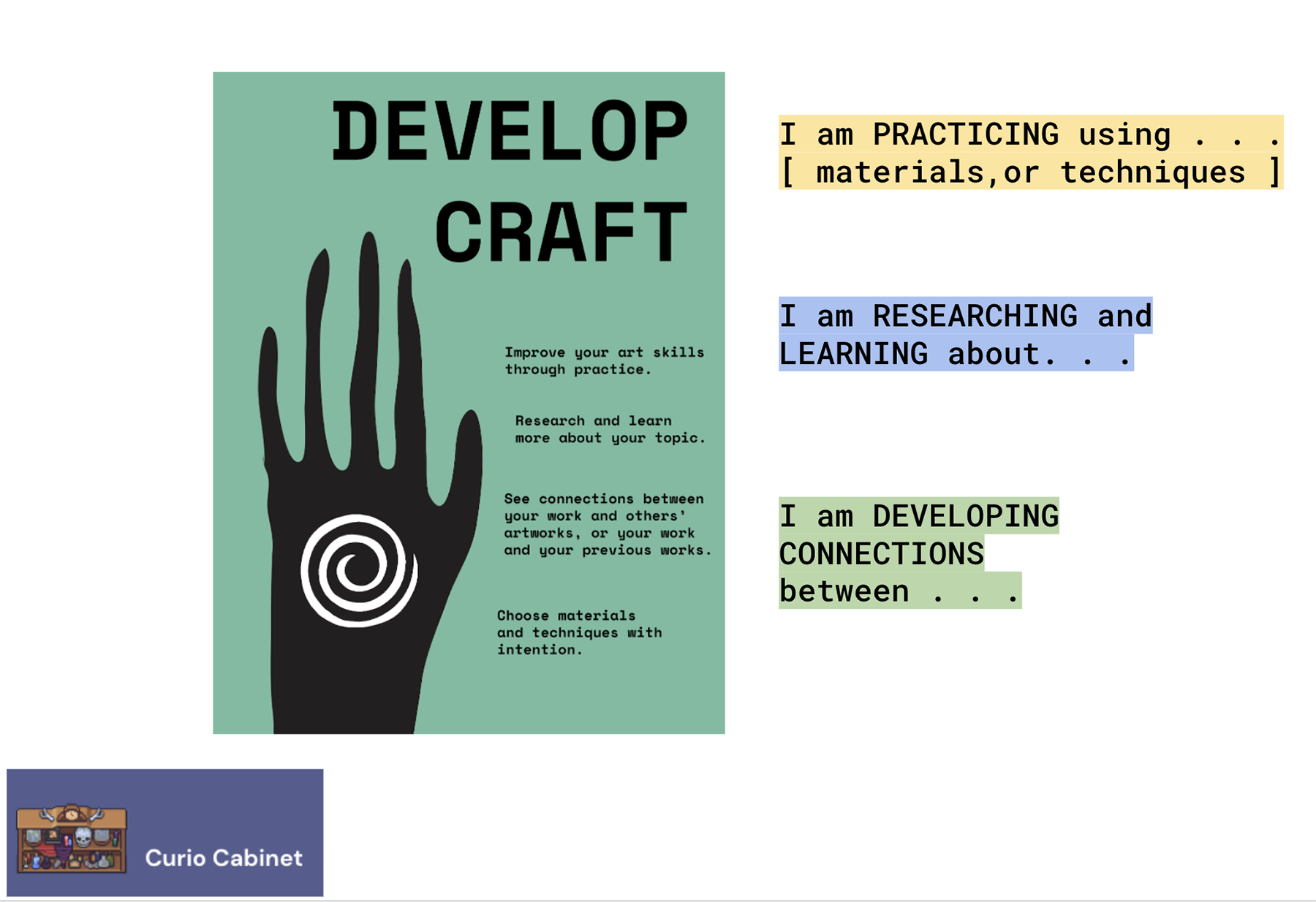
As described by Project Zero, the Studio Habits of Mind are “non-hierarchical” in that none logically comes first or last. The habits do not operate and should not be taught in a set sequence that privileges one or another of the others. Instead, one can begin with any habit and follow its generative energy through dynamic, interacting habit clusters that animate studio experiences as they unfold.” The Studio Habits of Mind I chose to introduce within our virtual space included:
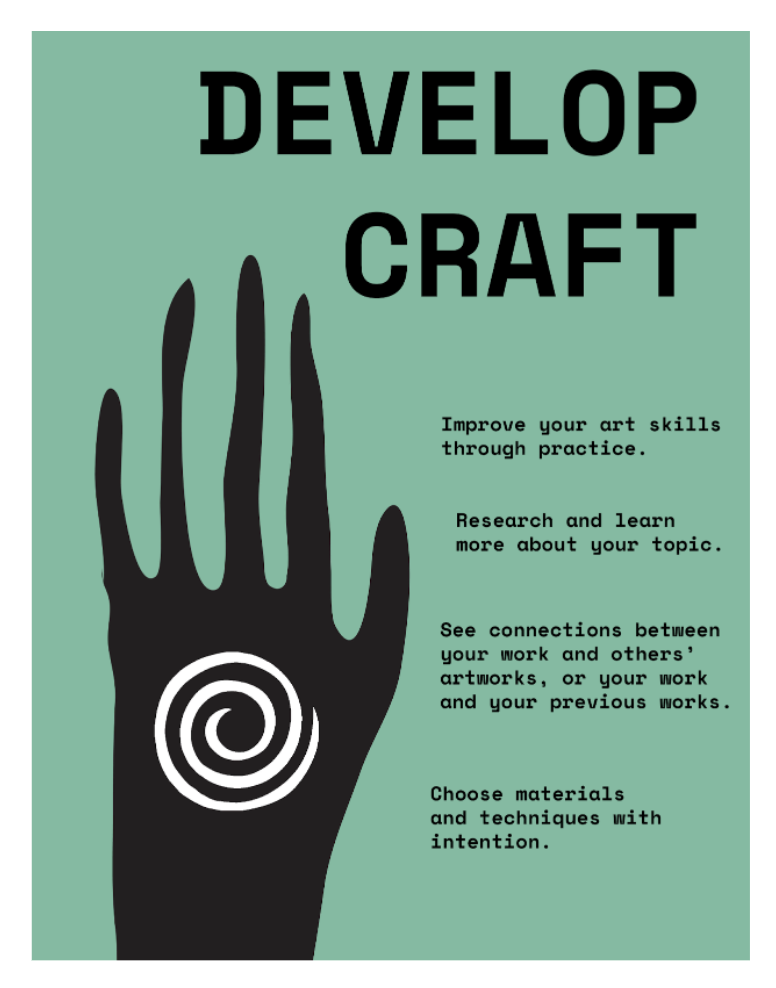
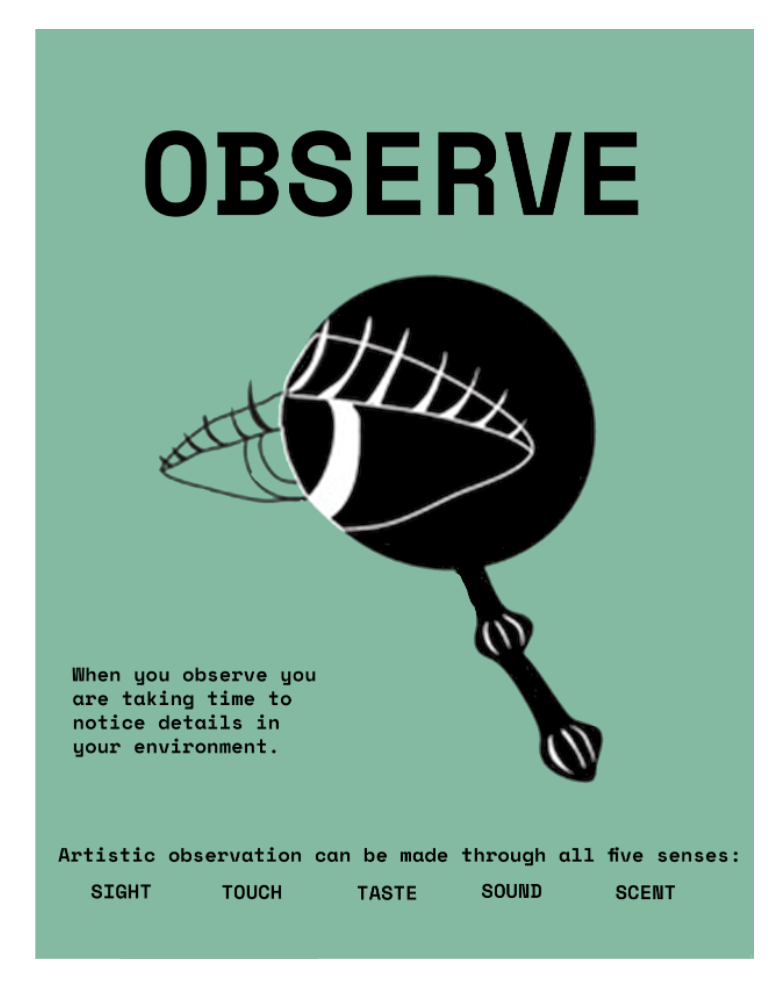
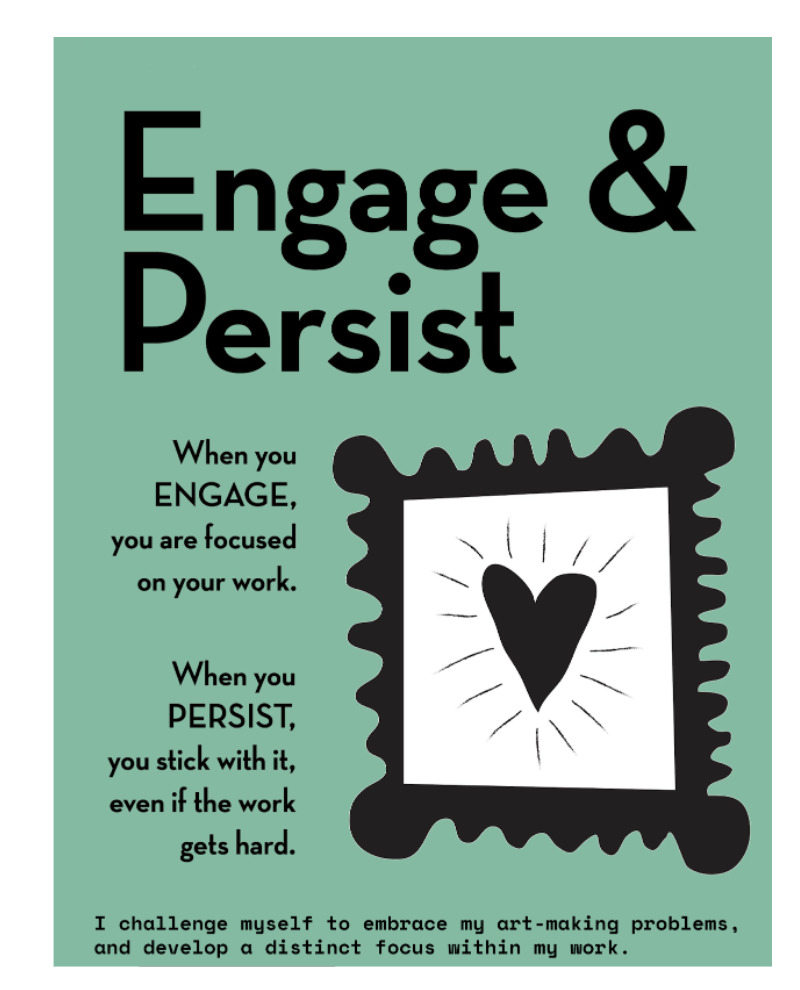
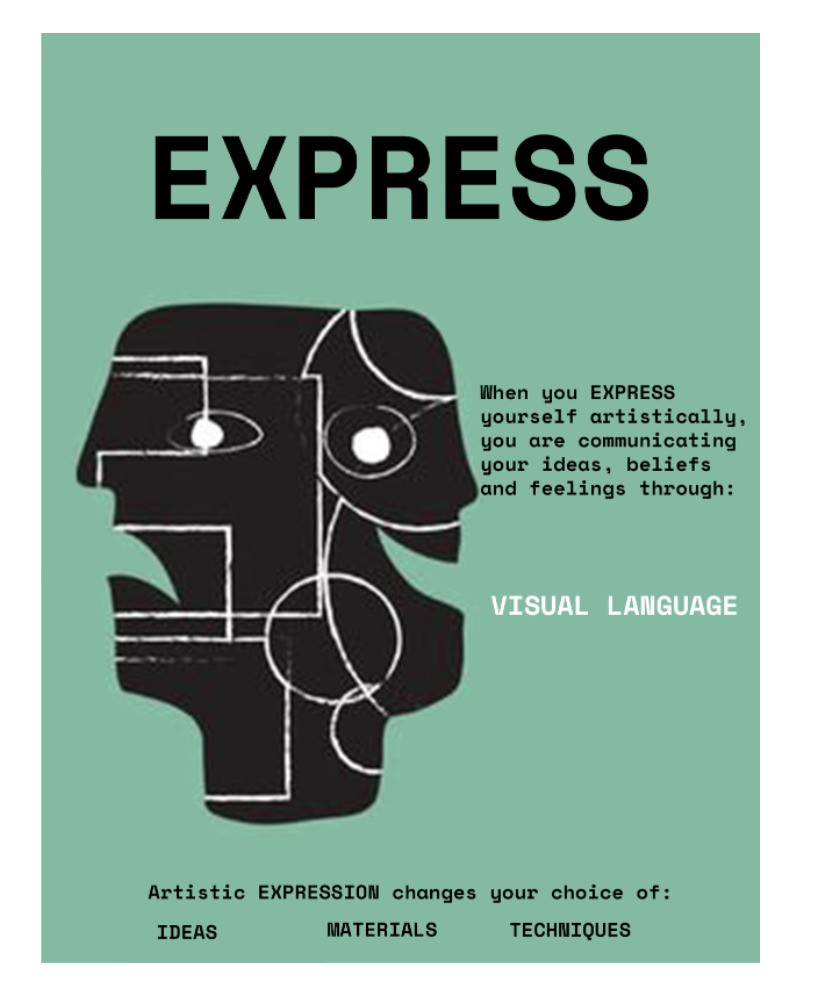
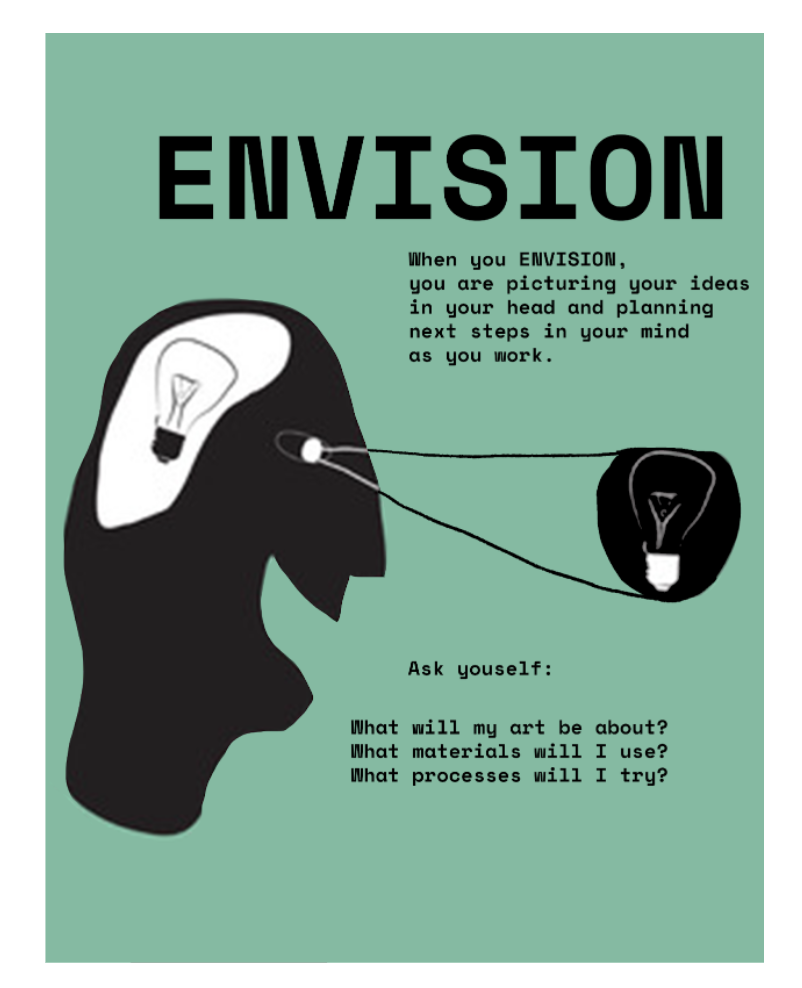
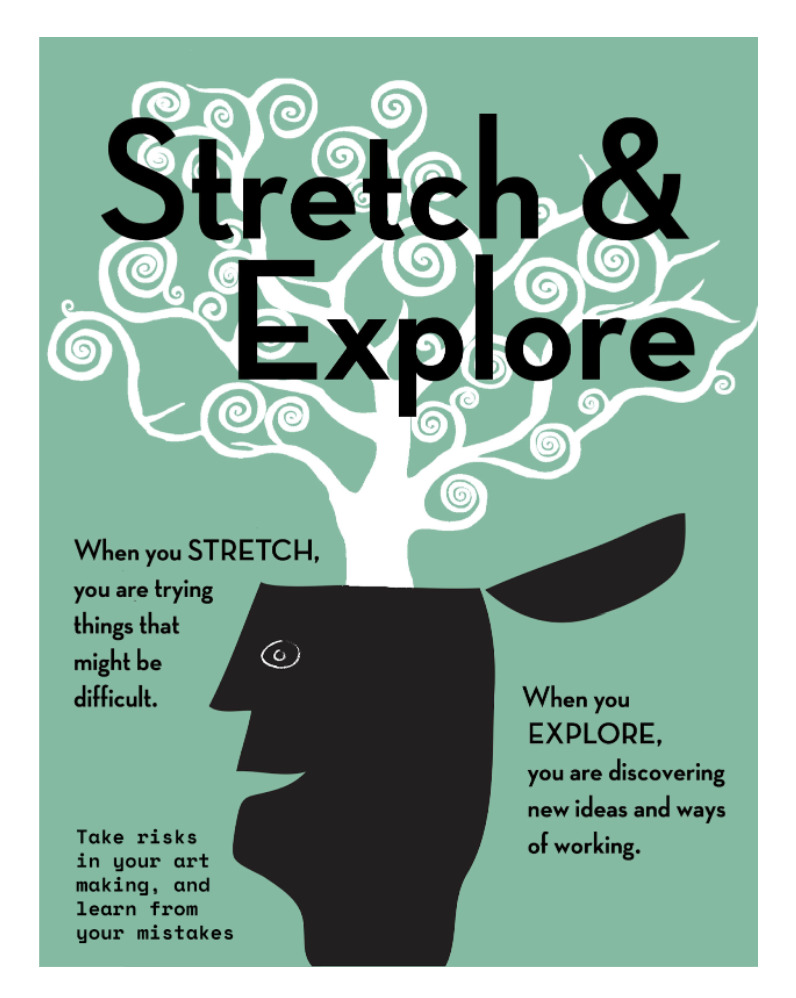
These Habits were placed around the art room in the form of visual posters that students could “walk” up to and open in order to learn about the specific habit in more detail.
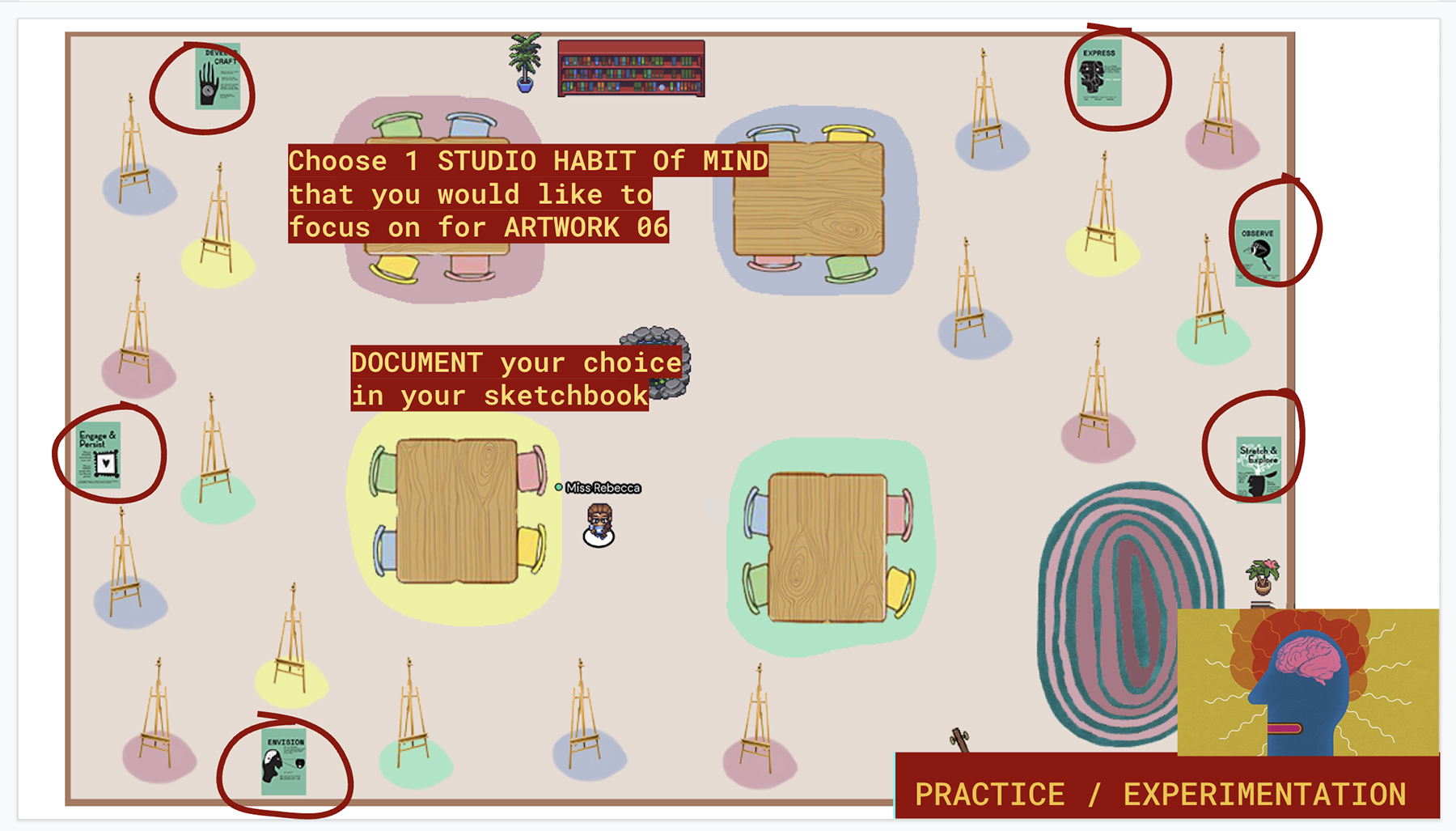
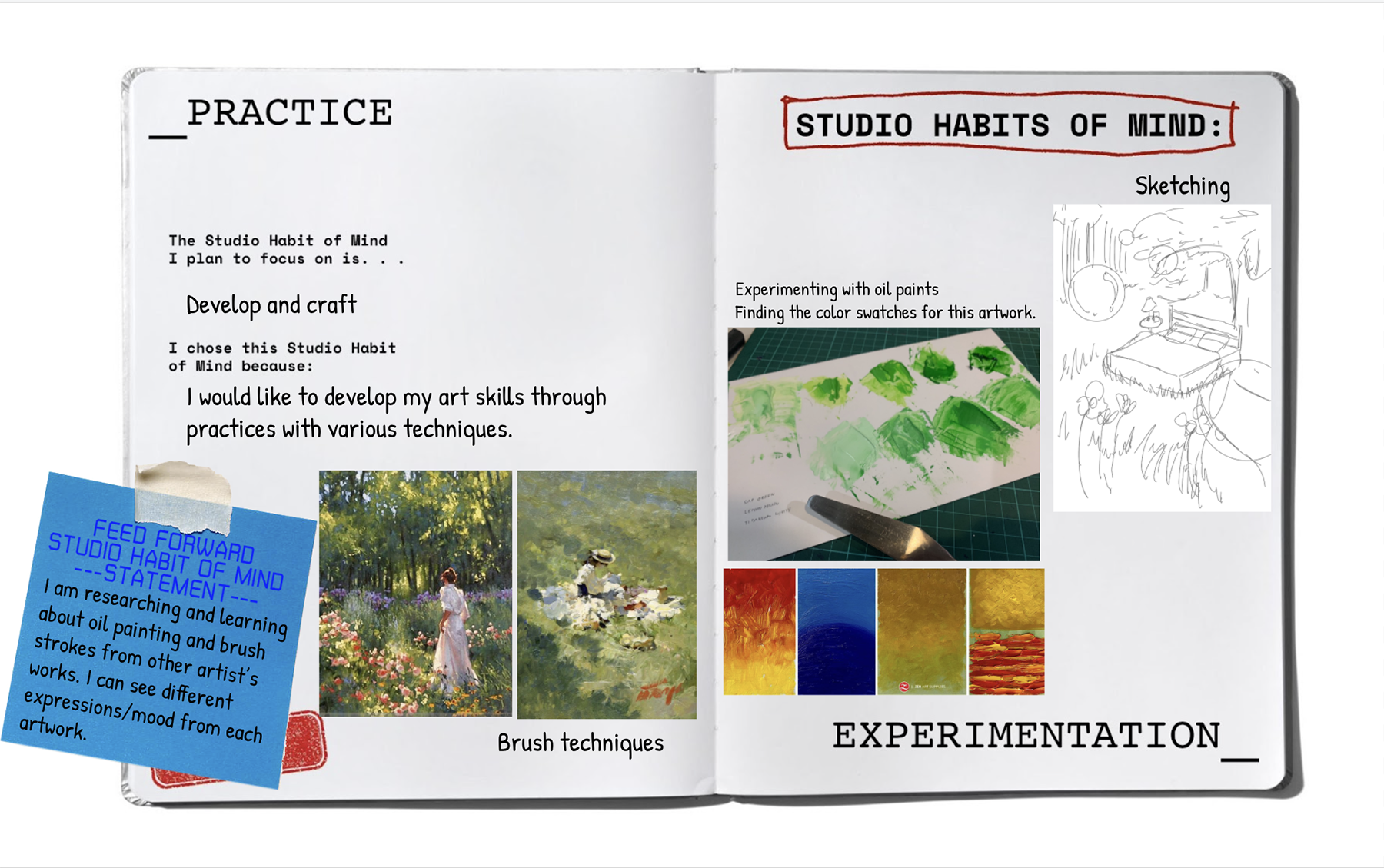
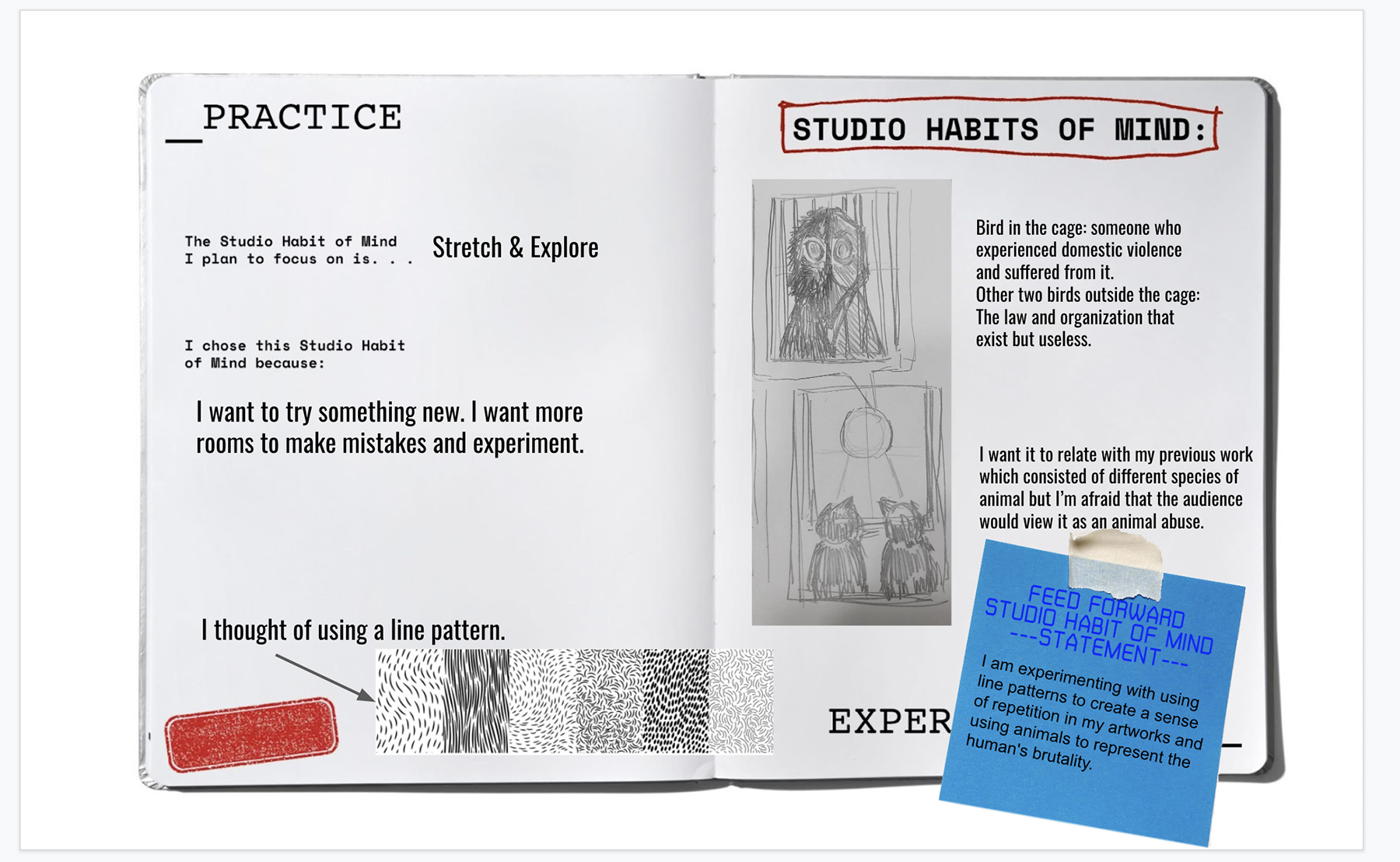
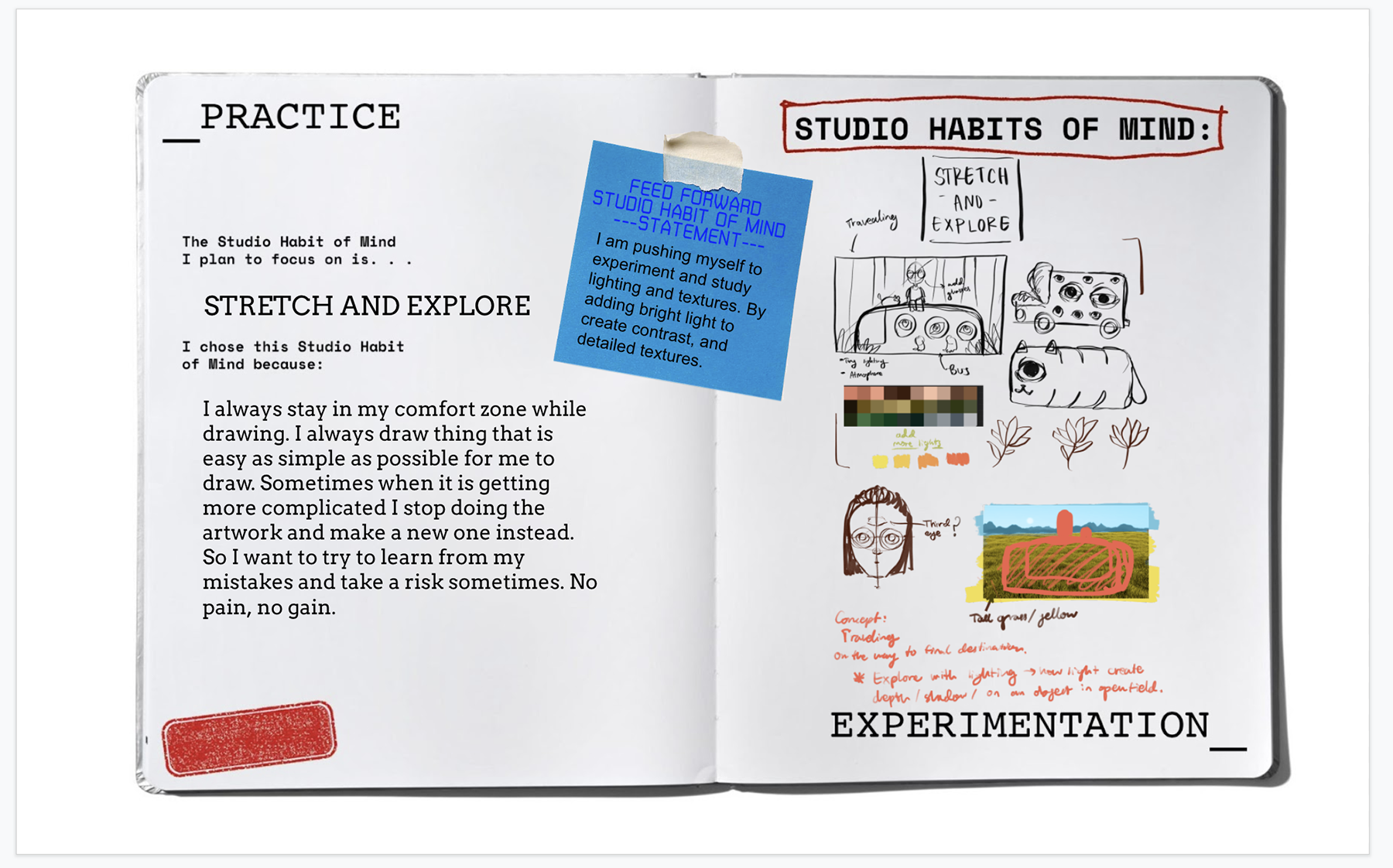
Students were invited to choose one Studio Habit of Mind that they would like to focus on for their next artwork and document their selection in their sketchbook.
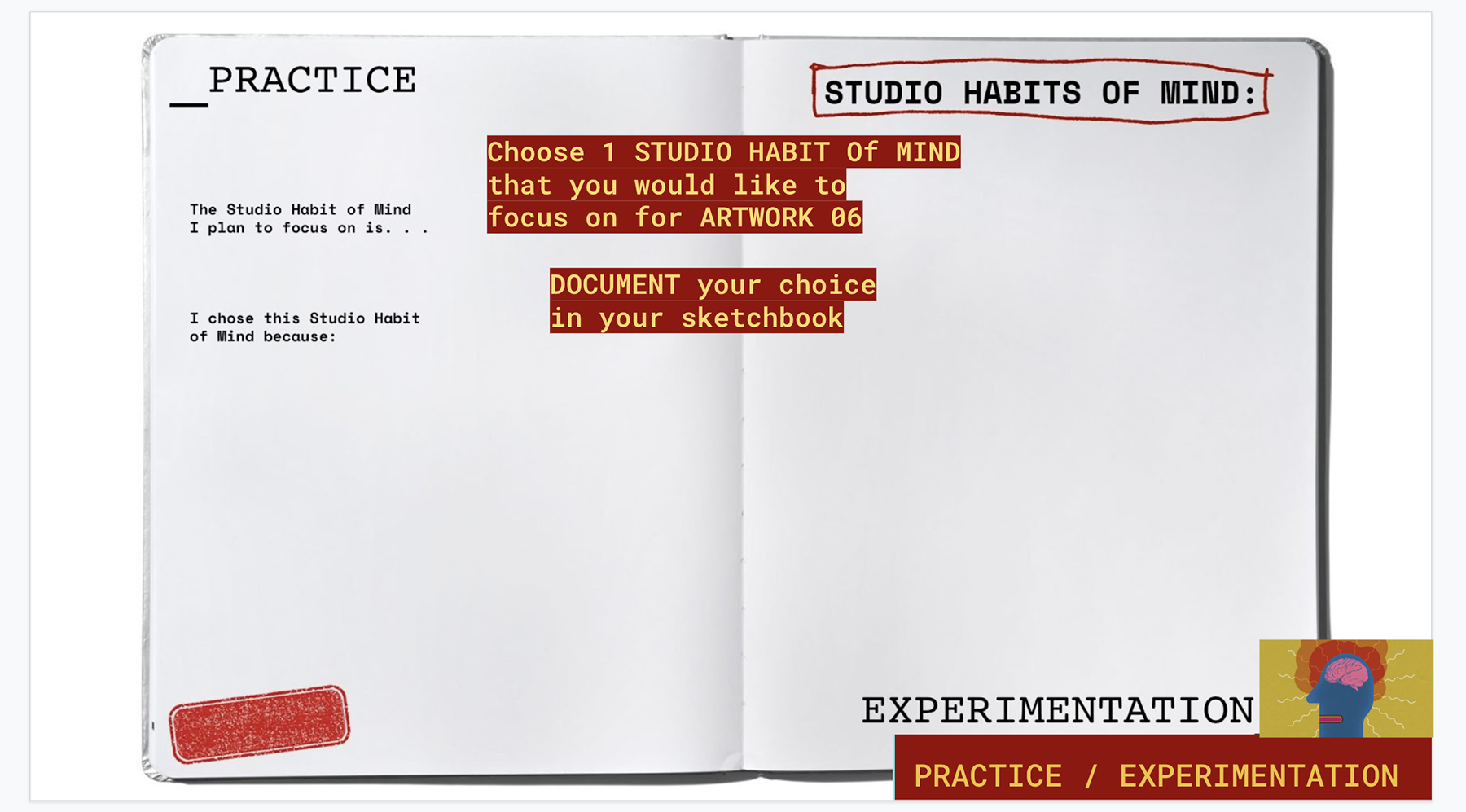
As we moved through the process of creating the next work, students were asked to document their process, reflecting upon how they were incorporating their selected Studio Habit of Mind into the development of their work.
Later on in the week students were asked to engage in “table talk” with others who had selected a common Studio Habit of Mind to focus upon within their work, sharing how they were incorporating the areas of focus this Habit supported into both their thinking and making processes. These table talk sessions allowed for students to bounce ideas off of one another while also providing them with a chance to see how others were approaching a challenge that they also shared.
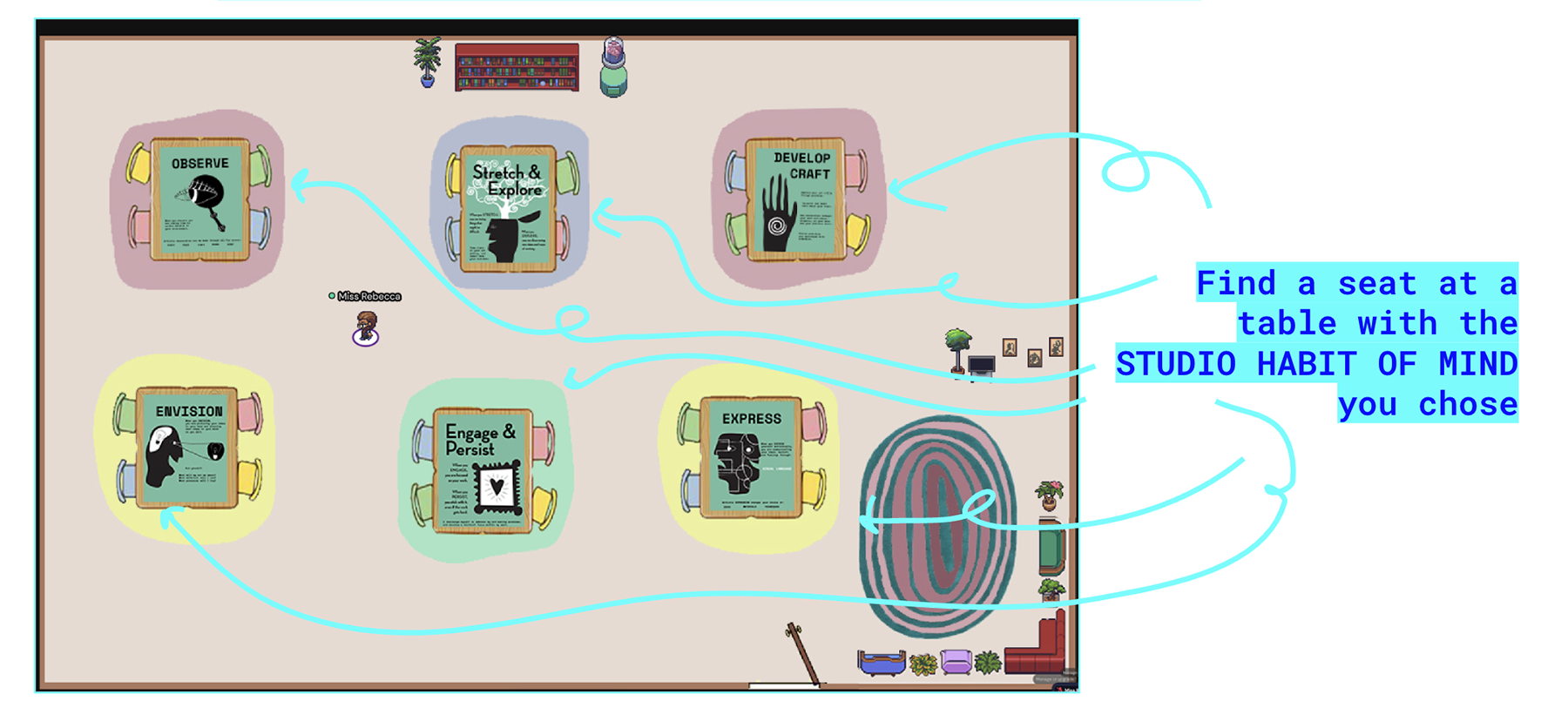
Lastly, to wrap up the activity and narrow our thoughts down to one or two concise sentences, students were asked to craft a Studio Habit of Mind Statement. As this request was made, a table object magically appeared on each of the art room tables. (Gathertown allows for one to set a specific time when an interactive object will appear, increasing not only the functionality of these objects but also the level of FUN their unannounced appearance elicits…) How can you not feel enticed to engage when a witch’s cauldron or a lit campfire magically appears in the middle of your table?
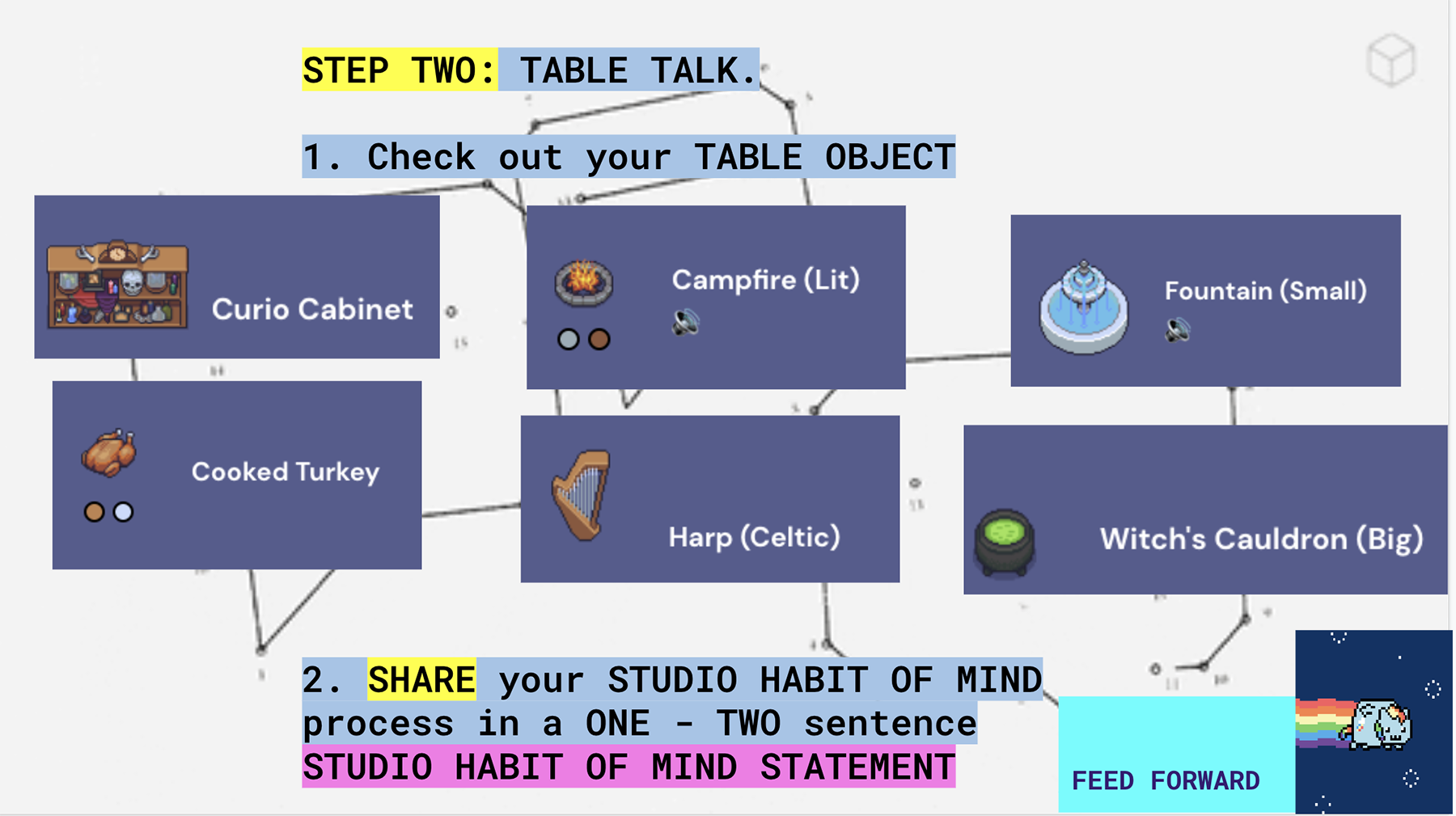
Students were invited to click on each of the objects which “held” sentence starters that could be utilized to scaffold their final Studio Habit of Mind Statements, which were then documented and shared within their digital sketchbooks.
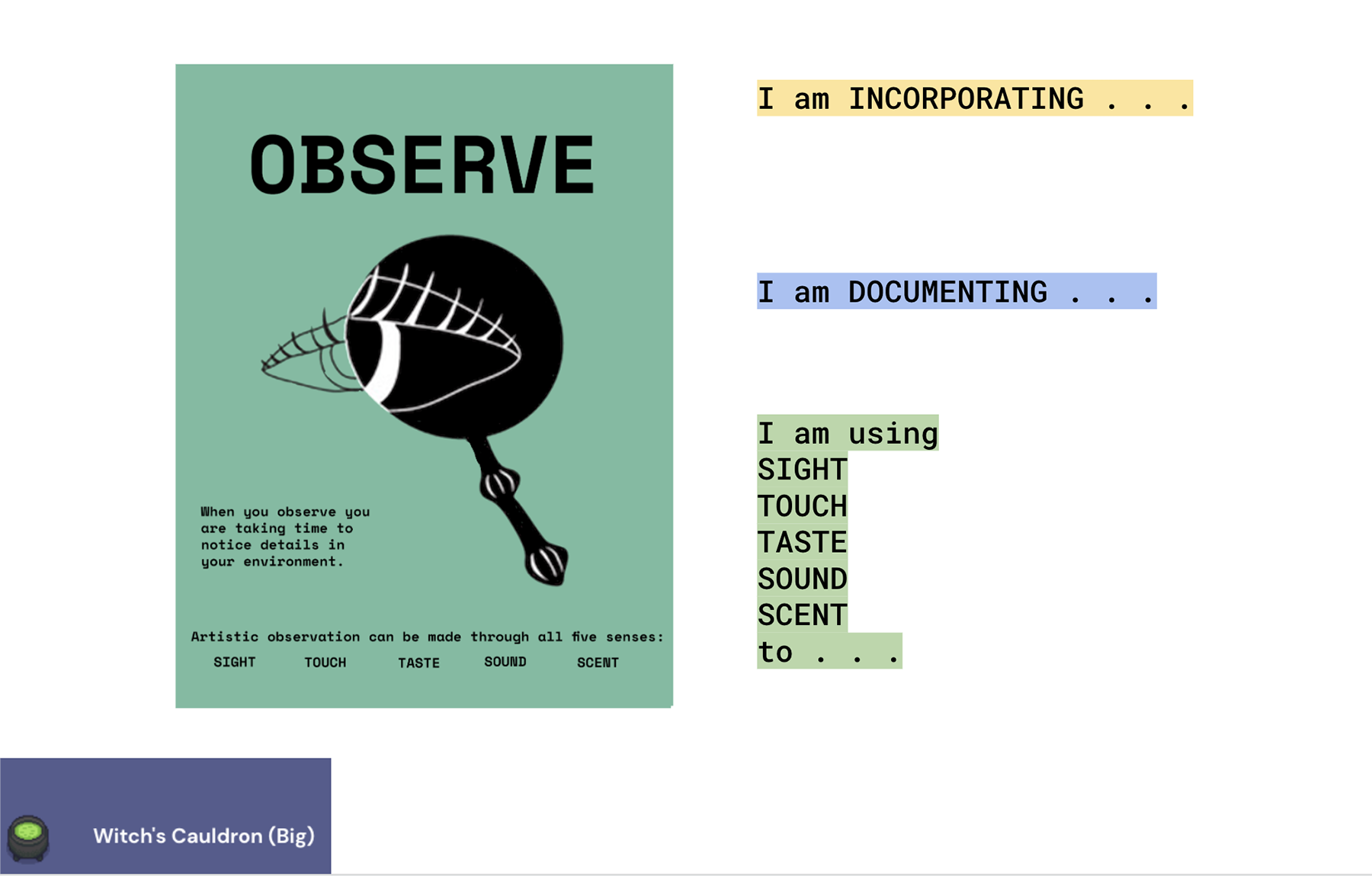
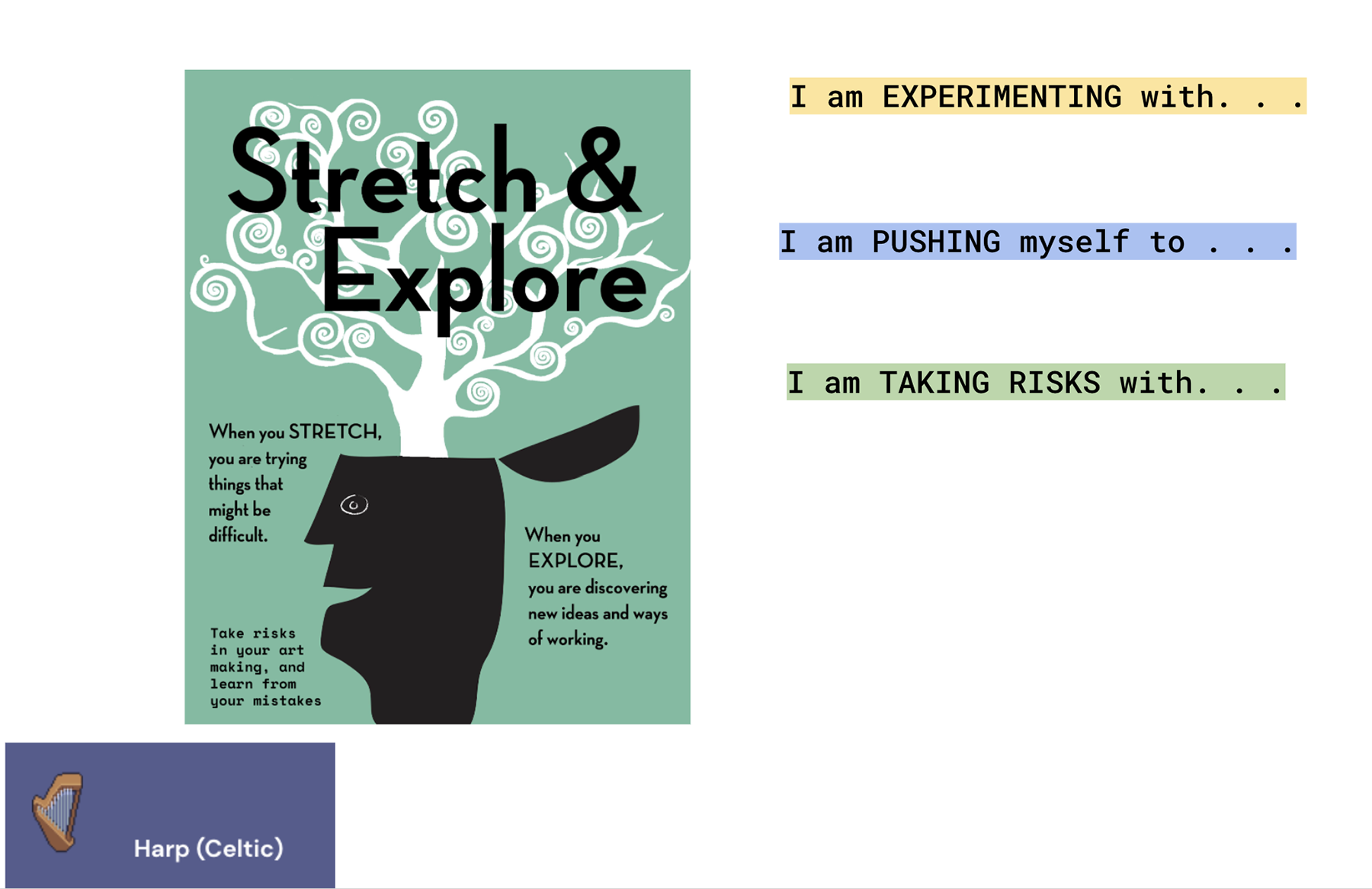
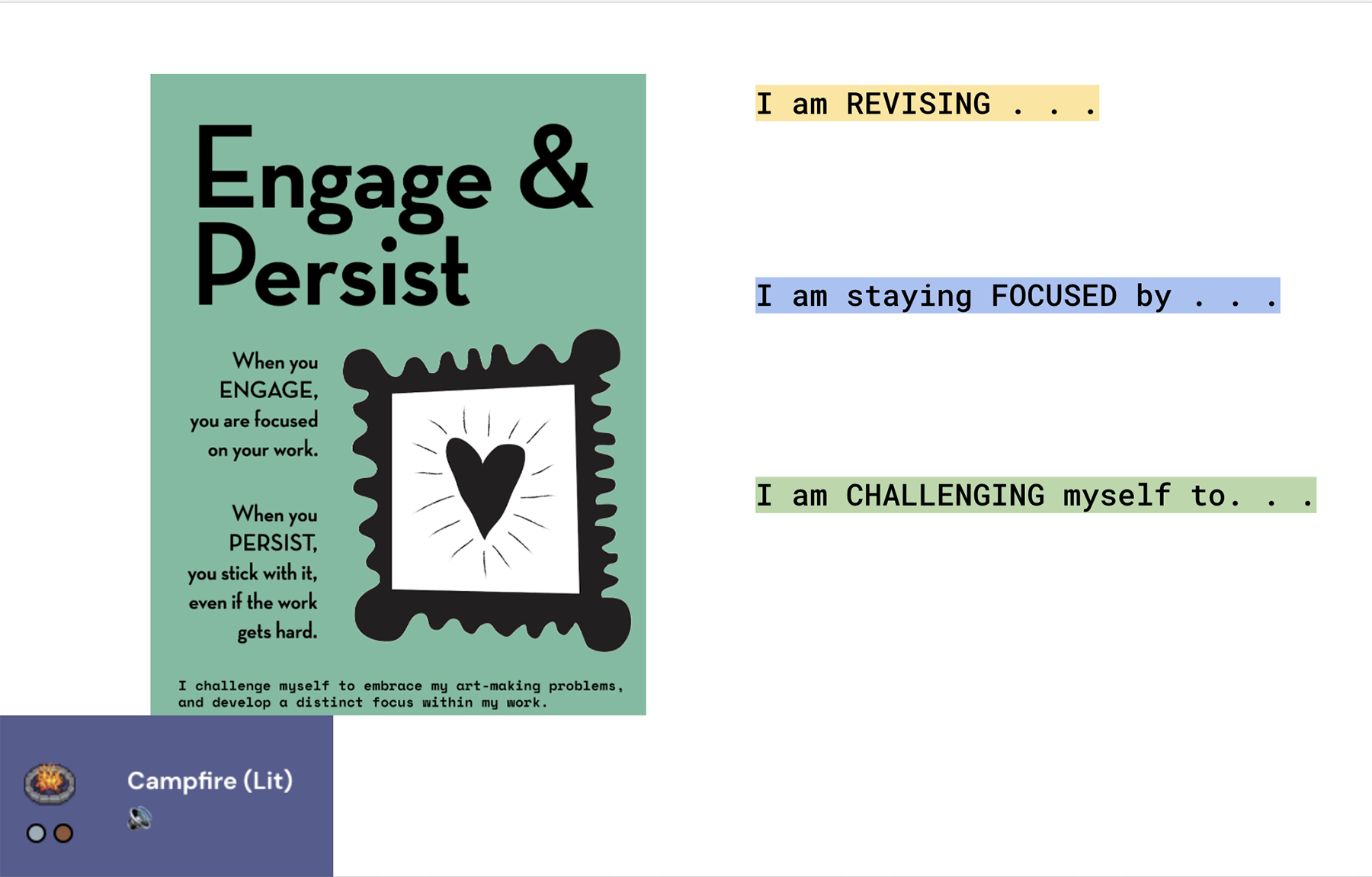
REFLECTION
Upon reflection, I think that what I love the most about the Studio Habits of Mind is that they act like a pendulum – they can turn “ways of thinking” into “ways of making” and they can also swing back the other way, turning “ways of making” into “ways of thinking.” I feel that bringing these Habits into the virtual classroom through the activities described above encourages students to view art making as more than simply learning about different materials and techniques, but also an opportunity to consider how and why artists work the ways they do – many reasons for which can be applied to (and beneficial for) countless situations both inside and outside of the art room, be it virtual or real.
Online learning has been undoubtedly challenging and successful in pushing me out of my comfort zone and into previously uncharted waters. I was forced to rethink not only methods and tools of content delivery but also, given the limitations of time, restricted access to materials and space and reduced possibilities for engagement with students, forced to really take time to reflect on what I was teaching, and how art class could be something more than simply an outlet for self-expression. I love that students have described the physical space of the art room as “an oasis,” and am happy that they feel comfortable to be in that space and create, but it would be an even greater achievement if the content I provide them with and the ways in which I invite their engagement could facilitate the same sense of comfort in any space or environment. This past year has provided me with the opportunity to investigate that challenge and, while I certainly do not want to repeat it, I am grateful for all that I have learned in the process. Online learning aided me in becoming a more reflective and (I hope) effective teacher, both in and outside of the art room.